
What's Happening?
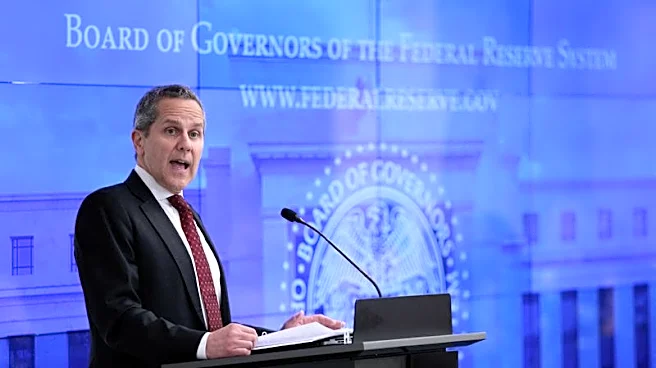
The U.S. Court of Appeals for the Second Circuit has ruled that a Puerto Rico bank does not have a statutory right to a Federal Reserve account. This decision supports the federal government's stance on maintaining
discretionary power over access to the federal payments system. The ruling comes amid increasing interest from fintech and cryptocurrency companies seeking access to these accounts, which are crucial for participating in the federal payments system. The court's decision underscores the Federal Reserve's authority to regulate which institutions can hold master accounts, a topic that has gained prominence as new financial technologies emerge.
Why It's Important?
This ruling is pivotal for the financial industry, particularly for fintech and cryptocurrency companies that are eager to integrate with the federal payments system. By affirming the Federal Reserve's discretionary power, the court has reinforced the central bank's role in safeguarding the integrity and stability of the financial system. This decision may impact the strategies of fintech and crypto firms, as they navigate regulatory landscapes to gain access to essential banking infrastructure. The ruling could also influence future legal and regulatory frameworks concerning the integration of innovative financial technologies with traditional banking systems.