




What's Happening?
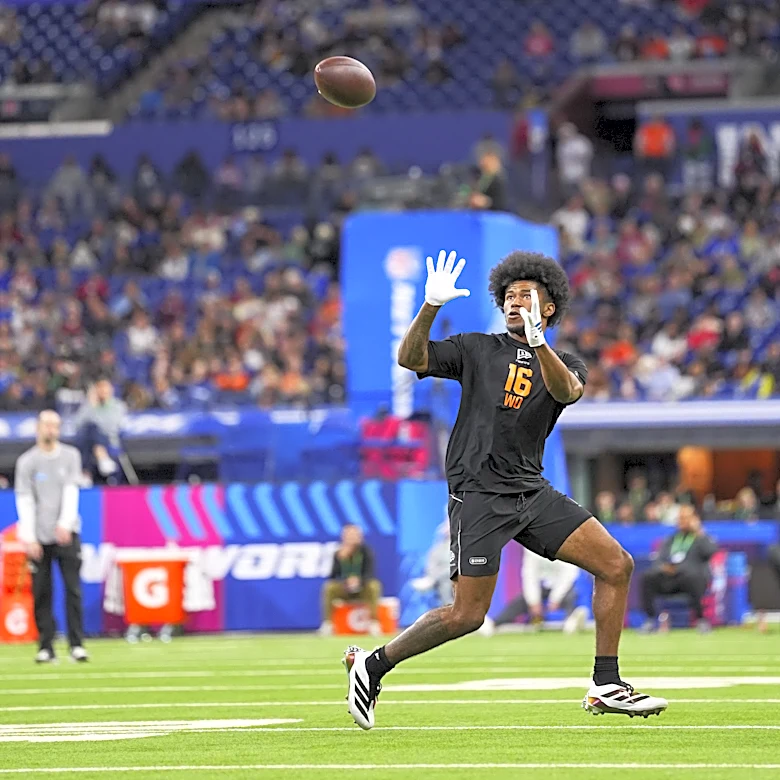
Fantasy analyst Joel Smyth has introduced the concept of Adjusted Breakout Age to evaluate wide receivers in the upcoming 2026 NFL Draft. This metric assesses the age at which a college wide receiver achieves 20% of their team's production, providing
insights into potential late-round steals and early-round busts. The analysis suggests that players who break out early in their college careers are more likely to transition successfully to the NFL. Smyth's research highlights historical data showing that top-performing fantasy wide receivers often have a breakout age below 20. The study also identifies several 2026 prospects with promising breakout ages, offering a strategic tool for fantasy football enthusiasts preparing for drafts.
Why It's Important?
The concept of Adjusted Breakout Age is significant for fantasy football players and NFL teams as it offers a predictive tool for assessing wide receiver prospects. By understanding the breakout age, stakeholders can identify potential undervalued players who may excel in professional leagues despite being drafted in later rounds. This metric helps mitigate risks associated with early-round picks who may not perform as expected. The analysis provides a data-driven approach to scouting, potentially influencing draft strategies and player evaluations. As fantasy football continues to grow in popularity, tools like this enhance the accuracy of player predictions, impacting both fantasy leagues and real-world team decisions.
What's Next?
As the 2026 NFL Draft approaches, teams and fantasy football players will likely incorporate Adjusted Breakout Age into their evaluation processes. This could lead to shifts in draft strategies, with increased focus on players who demonstrate early breakout potential. Analysts and scouts may further refine this metric, exploring additional factors that contribute to successful transitions from college to the NFL. The ongoing development of predictive analytics in sports could see broader adoption of similar metrics across different positions and leagues, enhancing the precision of player assessments and draft outcomes.