






What's Happening?
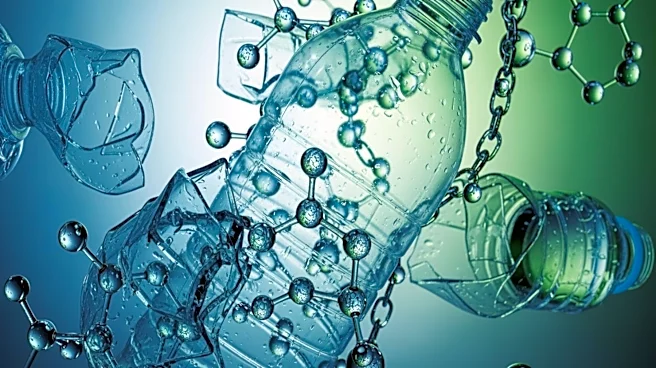
A recent study has explored the use of compatibilizers to improve the recycling process of plastic water bottles, which are typically composed of poly (ethylene terephthalate) (PET) and high-density polyethylene (HDPE). These two types of plastics are often
difficult to recycle together due to their incompatible properties. The study, conducted by scientists in France and Canada, investigated the blending of these polymers with compatibilizers, which are additives that reduce interfacial tension and enhance adhesion between different plastic phases. The research demonstrated that using compatibilizers can facilitate the recycling of plastic blends, potentially bypassing the need for sorting and simplifying the recycling process. This method could lead to more efficient recycling practices and reduce the environmental impact of plastic waste.
Why It's Important?
The findings of this study are significant as they address one of the major challenges in plastic recycling: the difficulty of processing mixed plastic waste. By using compatibilizers, the recycling process can become more economically viable and environmentally friendly. This advancement could lead to increased recycling rates, reducing the amount of plastic waste that ends up in landfills and oceans. Additionally, the ability to recycle mixed plastics without sorting could lower costs and encourage more widespread adoption of recycling practices. This development is crucial for industries and consumers alike, as it offers a potential solution to the growing problem of plastic pollution.
What's Next?
The study's promising results suggest that further research and development could lead to the commercialization of this recycling method. If adopted on a larger scale, it could transform the recycling industry by making it more efficient and cost-effective. Stakeholders, including recycling companies and environmental organizations, may push for the implementation of compatibilizer-based recycling processes. Additionally, policymakers might consider supporting this technology through incentives or regulations to promote sustainable waste management practices.
Beyond the Headlines
The use of compatibilizers in recycling could have broader implications beyond environmental benefits. It may also drive innovation in the manufacturing sector, as recycled plastics become more accessible and affordable. This could lead to new business opportunities and the development of products made from recycled materials. Furthermore, the technology could contribute to a circular economy, where waste is minimized, and resources are reused, ultimately leading to more sustainable consumption patterns.