




What's Happening?
Israeli start-up Voltify has successfully completed a $30 million seed funding round to advance its technology for converting diesel trains to electric use. The funding was led by Aleph and Fortescue, with additional contributions from Menomadin, Jimpact,
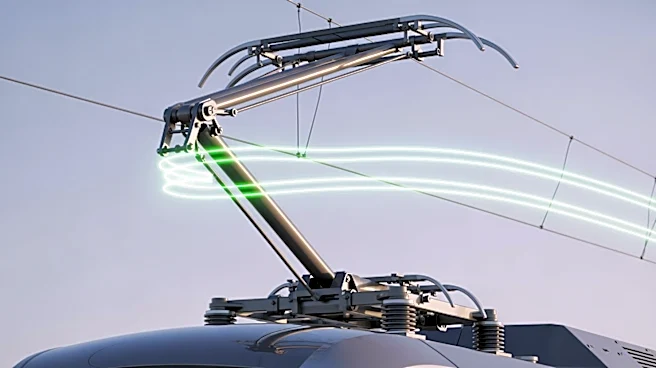
and The Dock, among others. Founded in 2024 by Dafna Langer and Alon Kessel, Voltify aims to revolutionize the railway industry by offering a system that allows trains to transition to electric power without the need for traditional infrastructure like overhead power lines. The company's solution includes battery-powered locomotives, dynamic charging systems, and microgrids that generate and store energy from renewable sources. Voltify has already signed a pilot agreement with a major railway company and plans to launch its first full-scale system in the U.S. within the next year.
Why It's Important?
Voltify's initiative is significant as it addresses the substantial energy consumption and carbon emissions associated with the railway industry. In the U.S., the six largest rail operators spend approximately $11 billion annually on diesel, highlighting the economic potential of Voltify's alternative solutions. By reducing reliance on diesel, Voltify's technology could lead to significant cost savings and environmental benefits. The company estimates it can cut over 50 million tons of carbon emissions annually within a decade, contributing to global efforts to combat climate change. This transition to cleaner energy sources aligns with broader industry trends towards sustainability and could set a precedent for other sectors to follow.
What's Next?
Voltify is preparing to deploy its technology through a paid pilot with one of the world's largest railway companies. The company is also experiencing a growing backlog of orders from regional operators in the U.S., indicating strong market interest. As Voltify rolls out its first full-scale system, it will likely attract further investment and partnerships, potentially accelerating the adoption of electric trains. The success of these initial deployments could influence regulatory policies and encourage other rail operators to consider similar transitions, further reducing the industry's environmental impact.
Beyond the Headlines
The shift from diesel to electric trains not only has environmental and economic implications but also cultural and operational ones. By enabling continuous operation without the need for frequent stops or constant grid connection, Voltify's technology could improve the efficiency and reliability of rail services. This innovation may also drive technological advancements in related fields, such as energy storage and renewable energy integration. Additionally, the move towards cleaner energy sources reflects a growing societal demand for sustainable practices, potentially influencing consumer preferences and corporate strategies across various industries.