
What's Happening?
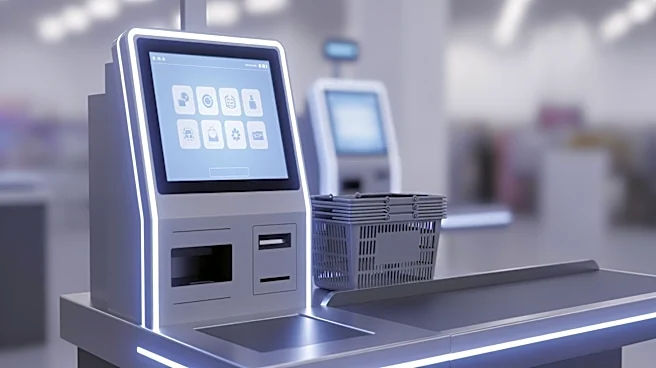
Aldi, a popular grocery chain, does not have a corporate policy regarding item limits at its self-checkout lanes. This lack of a standardized rule means that the number of items allowed can vary from store
to store. Some customers have reported that their local Aldi stores have removed previously existing item limits, while others have never experienced such restrictions. The inconsistency in policy is highlighted by customer discussions on platforms like Reddit, where experiences differ significantly. In some cases, stores have even removed self-checkout options due to theft concerns. This approach aligns with other major retailers like Walmart and Costco, which also do not enforce strict item limits at self-checkout lanes.
Why It's Important?
The absence of a uniform self-checkout policy at Aldi reflects a broader trend among retailers to offer flexible shopping experiences. This flexibility can enhance customer satisfaction by allowing shoppers to choose how they prefer to check out, whether through self-service or traditional lanes. However, it also places the onus on individual stores to manage customer flow and prevent issues like theft. For consumers, understanding the specific policies of their local stores can help avoid confusion and streamline their shopping trips. Retailers like Target, which enforce strict item limits, provide a contrast by offering more structured checkout experiences, potentially reducing wait times for customers with fewer items.
What's Next?
As retailers continue to adapt to changing consumer preferences, the role of self-checkout lanes may evolve further. Stores might implement more advanced technologies to enhance security and efficiency, such as improved scanning systems or mobile checkout options. Aldi and similar retailers may also consider standardizing their policies to provide a more consistent customer experience across locations. Additionally, consumer feedback will likely play a crucial role in shaping future checkout policies, as retailers strive to balance convenience with operational efficiency.