



What's Happening?
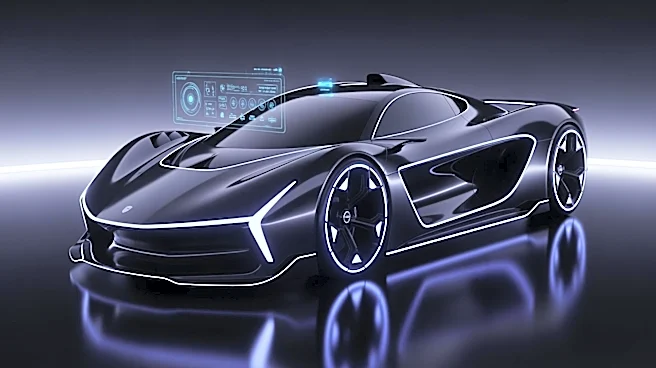
Dreame Technology, a company known for its smart home cleaning appliances, has unveiled its latest concept vehicle, the Nebula Next 01 hypercar, at the Dreame Next conference in San Francisco. This vehicle is equipped with dual solid rocket boosters,
allowing it to accelerate from 0 to 60 miles per hour in less than one second. The hypercar features an 'Intelligent Cockpit' that can determine the driver's destination and habits, utilizing a sophisticated AI agent and LiDAR technology for autonomous driving. The Nebula Next hypercar boasts nearly 1,900 horsepower and is equipped with Dreame Technology's DHX1 sensor, the world's first full-color LiDAR system with 4K resolution and a detection range of up to 600 meters. While the vehicle's production date and price remain undisclosed, Dreame representatives indicated that production could begin in China later this year, with potential consumer availability in 2027.
Why It's Important?
The unveiling of the Nebula Next hypercar represents a significant advancement in autonomous vehicle technology, highlighting the potential for high-performance vehicles to integrate sophisticated AI and LiDAR systems. This development could influence the future of the automotive industry by pushing the boundaries of what is possible with self-driving technology. The introduction of such advanced features in a consumer vehicle could accelerate the adoption of autonomous vehicles, impacting transportation infrastructure, regulatory frameworks, and consumer expectations. Companies like Dreame Technology are setting new standards for innovation, which could lead to increased competition and collaboration within the industry, ultimately benefiting consumers with more advanced and safer vehicles.
What's Next?
As Dreame Technology moves towards potential production of the Nebula Next hypercar, several challenges and opportunities lie ahead. The company will need to navigate regulatory approvals, particularly concerning the vehicle's autonomous capabilities and safety standards. Additionally, the market's response to such a high-performance autonomous vehicle will be crucial in determining its success. Industry stakeholders, including competitors and regulatory bodies, will likely monitor Dreame's progress closely, as it could set a precedent for future developments in autonomous vehicle technology. The company's ability to deliver on its promises and meet consumer expectations will play a critical role in shaping the future landscape of the automotive industry.
Beyond the Headlines
The introduction of the Nebula Next hypercar also raises ethical and legal questions regarding the deployment of autonomous vehicles with such high performance capabilities. The potential for these vehicles to operate without human intervention in designated areas challenges existing traffic laws and safety regulations. Furthermore, the integration of AI and LiDAR technology in consumer vehicles prompts discussions about data privacy and security, as these systems collect and process vast amounts of information. As the industry evolves, stakeholders will need to address these concerns to ensure that technological advancements align with societal values and legal frameworks.