


What's Happening?
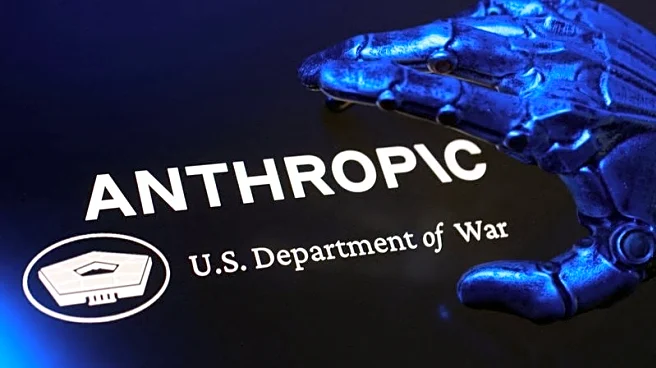
Anthropic, an artificial intelligence startup, has been designated as a supply chain risk by the U.S. government, a move that CEO Dario Amodei has decided to challenge in court. The designation, announced by the Department of Defense (DOD), restricts
defense vendors and contractors from using Anthropic's AI models, known as Claude, in their work with the Pentagon. This label is typically reserved for organizations linked to foreign adversaries, such as Huawei. Anthropic's conflict with the DOD centers on the use of its technology for fully autonomous weapons and domestic mass surveillance, which the company opposes. Despite the designation, Microsoft, a major investor in Anthropic, has stated that the company's products can still be used by customers outside of DOD contracts.
Why It's Important?
The designation of Anthropic as a supply chain risk has significant implications for the tech industry and national security. It highlights the tension between private tech companies and government agencies over the use of AI technologies in military applications. This case could set a precedent for how AI companies negotiate their involvement in defense projects, potentially influencing future collaborations between tech firms and the government. The outcome of this legal challenge may impact Anthropic's business operations and its relationships with other tech giants like Microsoft, which has invested heavily in the company. Additionally, it raises questions about the balance between national security and the ethical use of AI.
What's Next?
Anthropic's legal challenge against the supply chain risk designation will proceed in court, where the company will argue its case against the DOD's decision. The court's ruling could have far-reaching consequences for Anthropic and similar tech companies, potentially affecting their ability to engage in government contracts. Stakeholders, including defense contractors and tech investors, will be closely monitoring the case for its implications on future AI and defense collaborations. The decision could also prompt other tech companies to reassess their policies regarding the use of their technologies in military applications.