



What's Happening?
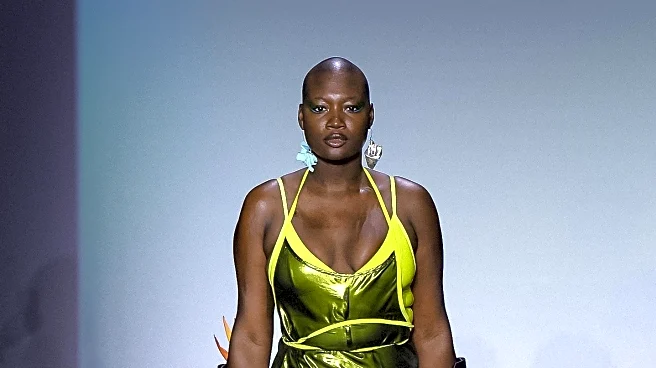
Ib Kamara, a prominent figure in the fashion industry, is advocating for a shift away from Eurocentric perspectives in fashion. In a recent discussion, Kamara shared his journey from Sierra Leone to London, highlighting the cultural shocks that shaped his creative identity. He emphasized the importance of young creatives trusting their own tastes and building with their peers, rather than adhering to traditional European hierarchies. Kamara's career trajectory includes redefining the magazine Dazed with a global-first mandate and taking on the role of art and image director at Off-White after Virgil Abloh's passing. He stresses the need for fashion to reflect the diverse cultures and conversations happening globally, particularly among young audiences.
Why It's Important?
Kamara's perspective is significant as it challenges the traditional dominance of European fashion standards, encouraging a more inclusive and diverse approach. This shift could lead to a broader representation of cultures in fashion, impacting how fashion brands and publications operate. By advocating for local creativity and global collaboration, Kamara is pushing for a fashion industry that is more reflective of the world's diversity. This approach not only empowers creatives from the Global South but also enriches the fashion landscape with varied narratives and styles. The potential impact includes a more equitable industry where diverse voices and talents are recognized and celebrated.
What's Next?
Kamara's call for decentralization in fashion may inspire other industry leaders and creatives to adopt similar approaches, potentially leading to a more diverse and inclusive fashion industry. As more creatives embrace this mindset, there could be a shift in how fashion is produced and consumed, with greater emphasis on local cultures and global collaboration. This could also influence fashion education and training, encouraging institutions to incorporate diverse perspectives and histories into their curricula. The ongoing dialogue around these issues may lead to significant changes in industry practices and standards.
Beyond the Headlines
Kamara's advocacy for decentralizing fashion highlights broader cultural and ethical implications. It challenges the historical power dynamics within the fashion industry and promotes a more equitable distribution of creative influence. This movement could lead to long-term shifts in how fashion is perceived and valued globally, fostering a more inclusive and representative industry. Additionally, it raises questions about the role of fashion in cultural identity and the responsibility of creatives to reflect and respect diverse backgrounds. Kamara's emphasis on kindness and community further underscores the need for a more compassionate and collaborative industry environment.