




What's Happening?
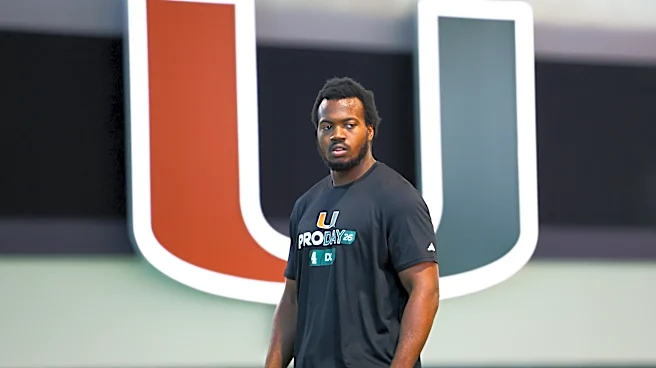
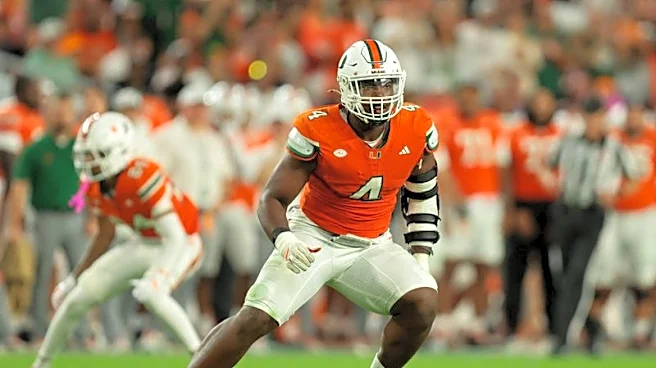
Rueben Bain Jr., a former defensive lineman for the Miami Hurricanes, is facing potential challenges in the upcoming NFL Draft due to concerns about his physical attributes and past legal issues. Bain's arm length, measured at 30 7/8 inches, is considered
shorter than ideal for his position, raising doubts about his effectiveness in the NFL. Additionally, Bain was involved in a 2024 accident where he was cited for careless driving, resulting in the injury and subsequent death of a 22-year-old woman. Although the charge was dismissed, this incident has led to increased scrutiny from NFL teams evaluating his draft potential. Bain's situation is not unique, as other players with similar backgrounds have experienced varying impacts on their draft positions.
Why It's Important?
The scrutiny surrounding Rueben Bain Jr. highlights the complex considerations NFL teams must weigh when evaluating draft prospects. Physical attributes like arm length can significantly influence a player's perceived potential, affecting their draft position and subsequent earnings. Bain's legal history adds another layer of complexity, as teams must assess character and potential public relations impacts. The financial implications are substantial, with top draft picks earning significantly more than those selected later. Bain's case underscores the broader challenges athletes face in balancing personal history with professional aspirations, and how these factors can influence career trajectories in professional sports.
What's Next?
As the NFL Draft approaches, teams will continue to evaluate Rueben Bain Jr.'s potential contributions against the backdrop of his physical and personal history. Bain's draft position will depend on how teams prioritize these factors and their willingness to invest in a player with both potential and perceived risks. The outcome will also serve as a case study for future prospects with similar backgrounds, influencing how teams approach the evaluation of talent with complex histories. Bain's performance in pre-draft evaluations and interviews will be crucial in shaping perceptions and potentially mitigating concerns.