





What's Happening?
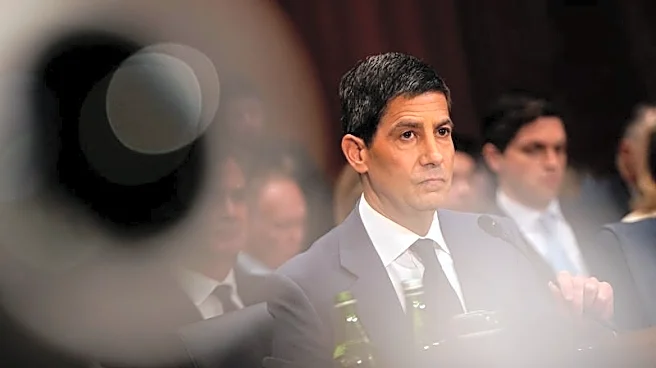
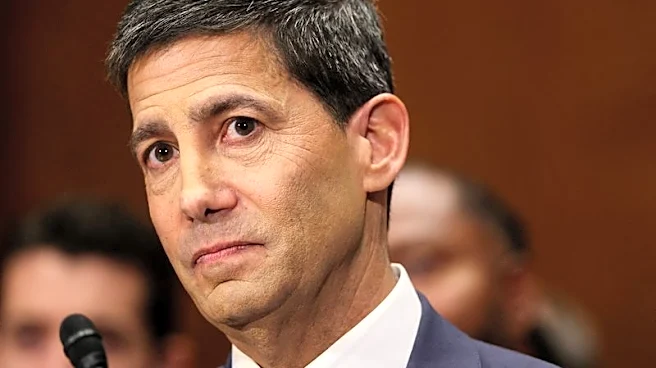
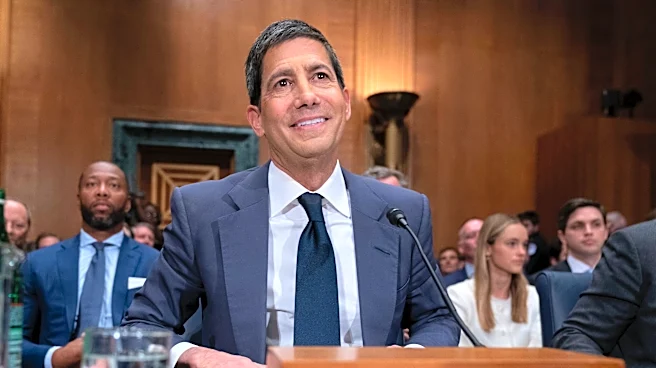
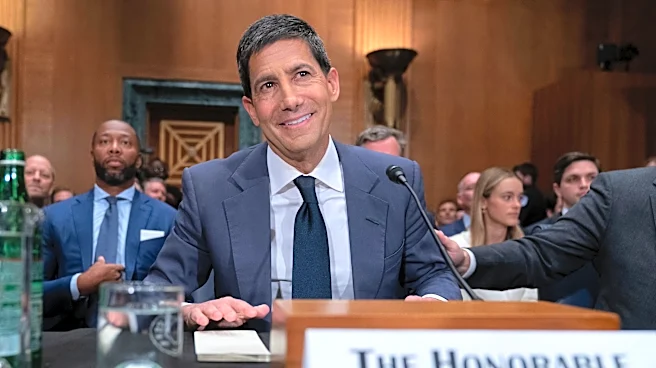
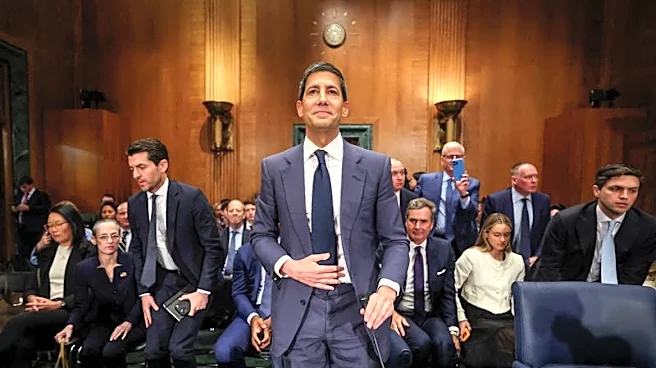
The U.S. Senate has confirmed Kevin Warsh as the new chair of the Federal Reserve, succeeding Jerome Powell. Warsh, a former Federal Reserve Governor and finance executive, was confirmed by a 54-45 vote, with only one Democrat, Sen. John Fetterman, joining
Republicans in support. This confirmation comes at a time when the Federal Reserve faces scrutiny over its independence, particularly due to President Trump's influence and ongoing legal cases. Warsh, who served on the Fed's Board of Governors from 2006 to 2011, will lead the central bank during a period of economic uncertainty marked by rising inflation and employment challenges. Despite President Trump's calls for lower interest rates, Warsh has stated that he was not asked to pre-commit to rate cuts and would not agree to such demands. As chair, Warsh will have one vote on the Federal Open Market Committee, which sets interest rates, and will need to build consensus among its members.
Why It's Important?
Warsh's confirmation is significant as it highlights ongoing debates about the Federal Reserve's independence and its role in managing the U.S. economy. The central bank's decisions on interest rates and monetary policy have far-reaching implications for economic stability, inflation control, and employment levels. Warsh's approach to these issues, particularly his openness to lower rates and focus on AI-driven productivity, could signal shifts in the Fed's policy direction. His leadership will be crucial in navigating the economic challenges posed by inflation and a tight labor market. Additionally, Warsh's stance on reducing the Fed's balance sheet may lead to changes in how the central bank operates and communicates with the public, potentially affecting investor confidence and market dynamics.
What's Next?
As Warsh assumes his role, he is expected to push for reforms within the Federal Reserve, including new tools and communication strategies. His focus on a smaller balance sheet and less reliance on forward guidance may lead to a philosophical shift from the Powell era. Warsh will need to work closely with other FOMC members, including Powell, who remains on the Board of Governors, to achieve consensus on monetary policy. The Fed's future actions will be closely watched by markets and policymakers, as they could influence economic growth, inflation rates, and employment trends. Warsh's ability to maintain the Fed's independence while addressing these challenges will be a key test of his leadership.