






What's Happening?
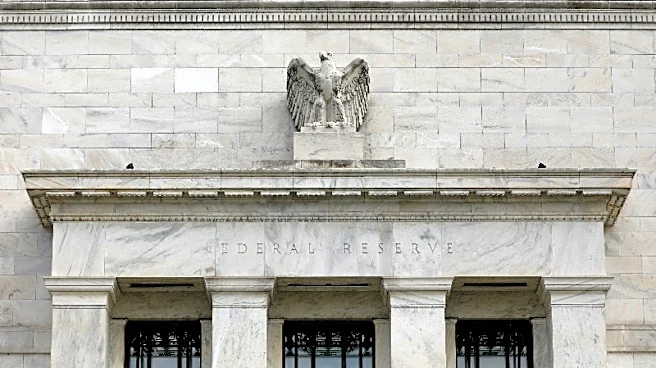
The U.S. Federal Reserve is expected to maintain its current interest rates throughout the year, according to a Reuters poll of economists. Despite President Trump's calls for rate cuts, the majority of economists predict that the federal funds rate will
remain steady in the 3.50%-3.75% range. This decision comes amid ongoing inflation concerns, with the Personal Consumption Expenditures Price Index rising 3.5% annually, the highest since May 2023. Economists largely view the current inflation spike, driven by the war in Iran, as transitory. However, there is a split opinion on whether these pressures could become more persistent.
Why It's Important?
The Federal Reserve's decision to hold interest rates steady reflects a cautious approach to managing inflation and economic stability. This stance impacts various sectors, including housing and consumer spending, as borrowing costs remain unchanged. The perception of inflation as transitory suggests that the Fed is prioritizing long-term economic health over short-term fluctuations. However, the ongoing geopolitical tensions and their impact on energy prices could pose risks to this outlook. The decision also highlights the challenges faced by the incoming Fed Chair, Kevin Warsh, in balancing economic growth with inflation control.
What's Next?
As the year progresses, the Federal Reserve will continue to monitor inflation trends and economic indicators. The potential for future rate adjustments will depend on the resolution of geopolitical tensions and their impact on global markets. Economists will be closely watching the Fed's policy meetings for any shifts in strategy, particularly if inflationary pressures persist. The financial markets may also react to any changes in the Fed's stance, influencing investment decisions and economic forecasts.