




What's Happening?
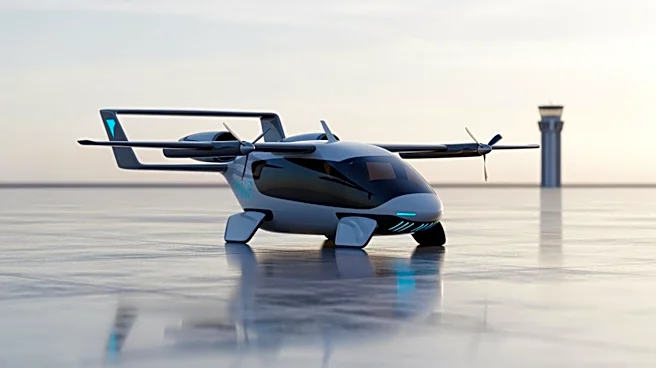
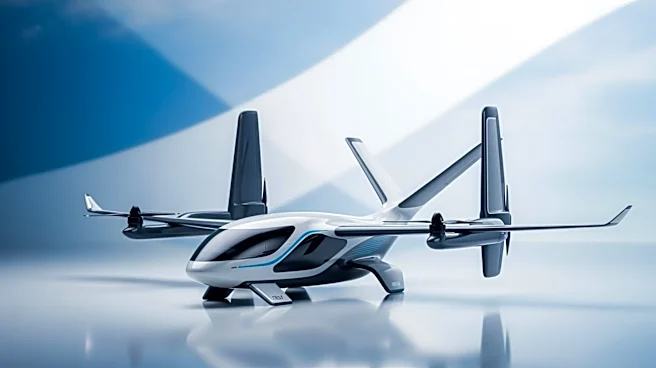
Eve Air Mobility is advancing its air taxi project by updating the control software of its engineering demonstrator. The company has completed nearly 60 flights since December and is now preparing for 'transition' flights in the third quarter. These flights will
test the aircraft's ability to switch from vertical take-off to forward wing-borne flight. The demonstrator has shown promising results in motor thrust and battery performance, although some adjustments are needed for operations in the ground-effect region. The company plans to finalize the design of a production-conforming aircraft by the end of the year, with the first prototype expected to fly in 2027.
Why It's Important?
The development of Eve's air taxi is significant for the urban air mobility sector, which aims to revolutionize short-distance travel in urban areas. Successful transition flights are crucial for proving the viability of eVTOL (electric vertical take-off and landing) aircraft, which could reduce traffic congestion and lower emissions in cities. Eve's progress also highlights the competitive landscape, as other companies like Archer Aviation and Joby Aviation are also advancing in this field. The advancements in eVTOL technology could lead to new regulatory frameworks and infrastructure developments to support urban air mobility.
What's Next?
Eve plans to complete its transition flights in the third quarter, which will be a critical milestone for the project. Following these tests, the company will evaluate the aircraft's response to system failures, aiming to finalize the design of a production-ready model. The first prototype is expected to be assembled by the end of the year, with a flight scheduled for 2027. The success of these steps will determine Eve's ability to enter the market and compete with other eVTOL developers.