



What's Happening?
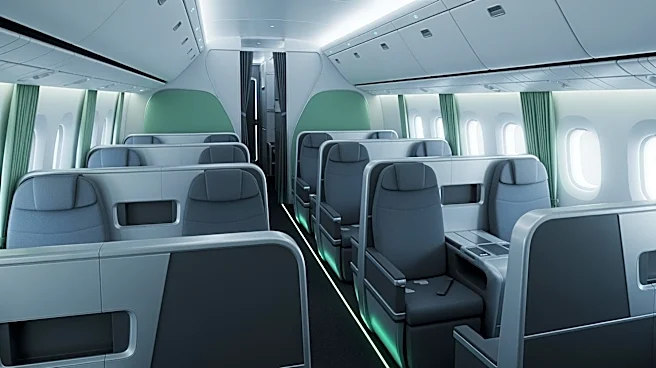
Aura Aero has introduced a series of new cabin configurations for its hybrid-electric ERA, a regional aircraft expected to enter service by 2030. The updated designs range from an eight-seat VIP layout to a 19-passenger high-density regional cabin, based
on market feedback and design modifications. The aircraft features a larger front-left passenger door that also serves as a cargo door, optimizing space and seating arrangements. The cargo configuration offers a volume of 21.5 cubic meters, appealing to carriers seeking to reduce operating costs and emissions.
Why It's Important?
The introduction of hybrid-electric aircraft like the ERA represents a significant step towards sustainable aviation. By offering reduced emissions and operating costs, the ERA could appeal to regional carriers looking to modernize their fleets with environmentally friendly options. The development of such aircraft aligns with global efforts to decarbonize the aviation industry, which is a major contributor to greenhouse gas emissions. Aura Aero's advancements could influence industry standards and encourage further innovation in sustainable aviation technologies.
What's Next?
Aura Aero plans to conduct the first flight of the ERA in late 2027, with additional prototypes to follow for certification purposes. The company has received 700 letters of intent and 20 firm orders, indicating strong market interest. Collaboration with partners like Safran and Airbus will continue to play a crucial role in the aircraft's development. The potential introduction of a military version, the Intruder, could expand the aircraft's applications and market reach.
Beyond the Headlines
The development of hybrid-electric aircraft raises questions about the future of aviation infrastructure and regulatory frameworks. As these technologies advance, airports and air traffic management systems may need to adapt to accommodate new types of aircraft. The shift towards sustainable aviation could also impact employment and skill requirements within the industry, necessitating workforce training and development.