
What's Happening?
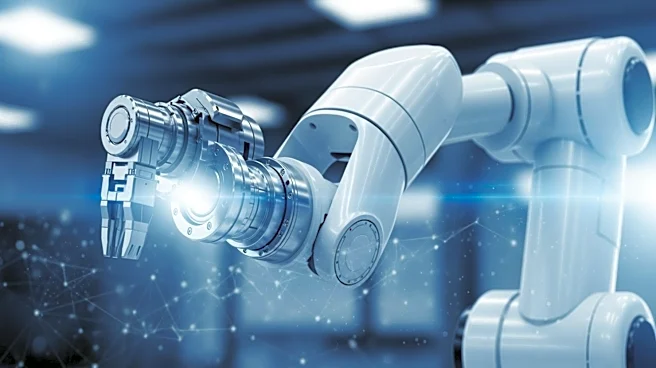
Universal Robots, a Danish company known for its collaborative industrial robots, or cobots, has addressed a critical vulnerability in its operating system, PolyScope 5. The flaw, identified as CVE-2026-8153,
is an OS command injection vulnerability in the Dashboard Server interface, which could allow unauthenticated attackers with network access to execute remote code on the robot's operating system. This vulnerability, rated with a CVSS score of 9.8, has been patched in the latest version, PolyScope 5.25.1. The vulnerability was discovered by Vera Mens, a security researcher from Claroty, who noted that while many industrial robots lack a remote management interface, Universal Robots' cobots have a control box with an Ethernet port that can be used for remote control. This setup, often found in flat, unsegmented networks, could allow attackers to compromise multiple cobots if exploited.
Why It's Important?
The patching of this vulnerability is crucial for maintaining the security and integrity of industrial operations that rely on cobots. If left unaddressed, the flaw could have allowed attackers to gain control over entire fleets of cobots, potentially disrupting manufacturing processes and posing safety risks to human workers. The incident highlights the importance of robust cybersecurity measures in industrial environments, where interconnected devices can be vulnerable to exploitation. Companies using these cobots must ensure their networks are properly segmented and secured to prevent unauthorized access. The situation underscores the growing need for vigilance in protecting industrial control systems from cyber threats, which can have significant economic and operational impacts.
What's Next?
Organizations using Universal Robots' cobots are advised to update to the latest version of PolyScope to mitigate the risk of exploitation. Additionally, they should review their network configurations to ensure proper segmentation and security measures are in place. The incident may prompt other manufacturers of industrial robots to reassess their own security protocols and address potential vulnerabilities. As the industrial sector becomes increasingly digitized, ongoing collaboration between cybersecurity experts and manufacturers will be essential to safeguard against emerging threats. Stakeholders may also push for more stringent industry standards and regulations to enhance the security of industrial control systems.