
What's Happening?
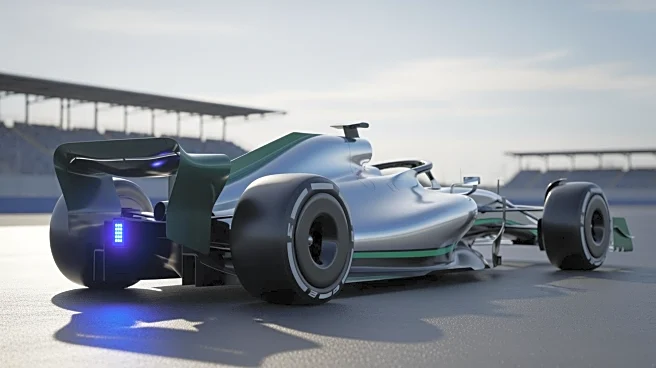
During the recent Formula 1 testing in Barcelona, the new Aston Martin AMR26 car was observed with a blue rear warning light, deviating from the typical red. This unusual feature was noted during the initial
laps driven by Lance Stroll and Fernando Alonso. The 2026 F1 technical regulations require cars to have rear warning lights, usually red, to enhance visibility during certain conditions like wet weather or when cars are not running at full power. However, Aston Martin's choice of a blue light sparked curiosity, as it is generally used for cars driven by drivers without a superlicence, which does not apply to experienced drivers like Stroll and Alonso. Aston Martin did not provide an official explanation, but it is understood that the blue light was part of a specific test plan involving speed limitations to gather aerodynamic data or to avoid stressing components early in the testing phase.
Why It's Important?
The introduction of a blue warning light by Aston Martin highlights the team's strategic approach to testing their new F1 car under specific conditions. This move could indicate a focus on data collection and component preservation, which are crucial for optimizing performance and reliability in the competitive F1 environment. The decision to use a blue light also underscores the importance of communication and safety on the track, ensuring that other teams are aware of the car's speed limitations. This development may influence how other teams approach their testing strategies, potentially leading to innovations in how data is gathered and analyzed during pre-season tests.
What's Next?
As the testing continues, it will be important to observe whether Aston Martin maintains the use of the blue light or transitions to the standard red as their testing program evolves. The team's performance and data collection strategies will likely be scrutinized by competitors and analysts, potentially impacting their approach to the upcoming F1 season. Other teams may also adopt similar strategies if Aston Martin's approach proves successful, leading to broader changes in testing methodologies across the sport.