
What's Happening?
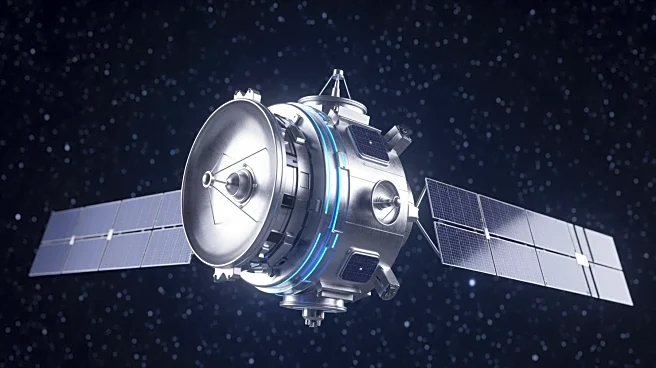
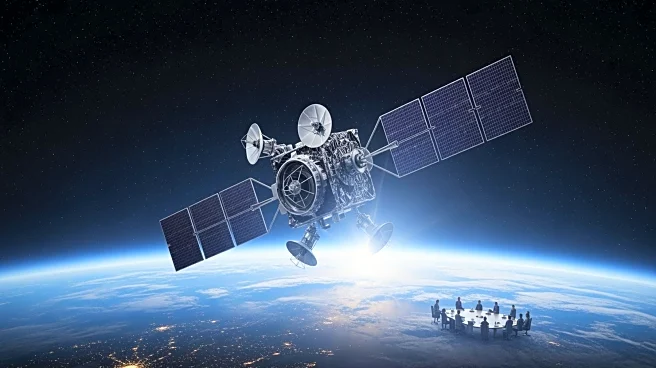
Leonardo has commenced the construction of the first satellites for a self-funded, multi-sensor low-Earth-orbit (LEO) constellation. The company announced its plans to deploy a constellation of approximately
20 satellites, with the initial launches scheduled for next year. Massimo Comparini, managing director of Leonardo's space division, confirmed that the preliminary design review was completed within eight months, demonstrating the company's ability to move swiftly. The first satellites are expected to be launched by the end of next year, with the entire system achieving initial operational capability by 2028 and full operational capability by 2029. The satellites are designed to evolve over time, incorporating in-space links and artificial intelligence capabilities for autonomous task execution. Additionally, Leonardo is exploring quantum key encryption for enhanced security.
Why It's Important?
The development of this satellite constellation by Leonardo represents a significant advancement in space technology, particularly in the realm of multi-sensor capabilities. This initiative could enhance global satellite communication and imaging capabilities, providing more comprehensive data for various applications, including environmental monitoring, defense, and commercial use. The integration of artificial intelligence and quantum encryption could set new standards for satellite operations, offering more secure and efficient data handling. This project positions Leonardo as a competitive player in the rapidly evolving space industry, potentially influencing market dynamics and encouraging further innovation in satellite technology.
What's Next?
As Leonardo progresses with the construction and launch of its satellite constellation, the company will likely focus on refining the technology and ensuring the successful deployment of the initial satellites. Stakeholders in the space industry, including competitors and potential clients, will be observing the project's development closely. The successful implementation of AI and quantum encryption could lead to new partnerships and collaborations, as well as potential regulatory considerations regarding the use of advanced technologies in space. The project's progress may also prompt other companies to accelerate their own satellite initiatives, contributing to a more competitive and innovative space sector.