
What's Happening?
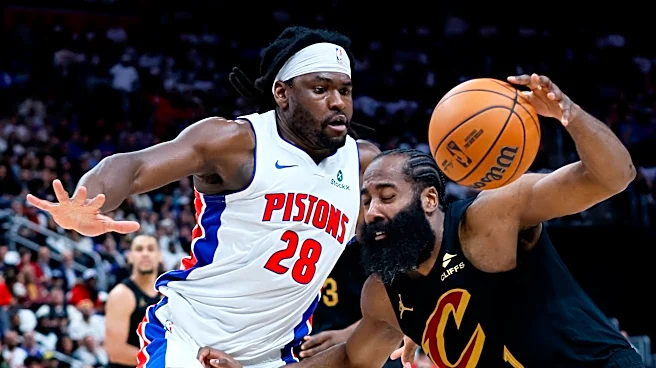
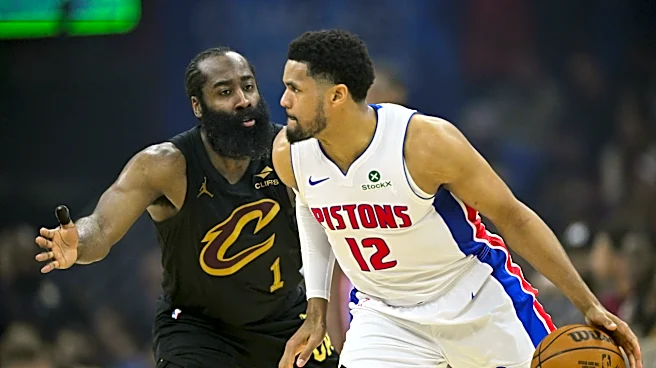
Cleveland Cavaliers guard Donovan Mitchell has raised concerns about the officiating in the Eastern Conference semifinals against the Detroit Pistons. Mitchell, a seven-time NBA All-Star, has been averaging
fewer free-throw attempts in the playoffs compared to the regular season, leading him to question whether he needs to exaggerate contact to receive foul calls. In Game 1, Mitchell drew only two fouls and two free-throw attempts, despite being a dynamic driver known for drawing contact. The Pistons, known for their physical play, were called for fewer fouls than expected, which has added to Mitchell's frustration. The issue of flopping and officiating has been a topic of discussion in the league, with recent fines for players like Jaylen Brown of the Boston Celtics for criticizing referees.
Why It's Important?
Mitchell's comments highlight ongoing debates about officiating consistency in the NBA, particularly during the playoffs when games are more intense and stakes are higher. The perception of biased officiating can impact player performance and team strategies, potentially affecting the outcome of crucial games. For the Cavaliers, Mitchell's ability to draw fouls is a key component of their offensive strategy, and any perceived unfairness in officiating could hinder their playoff success. The broader implications for the NBA include maintaining the integrity of the game and ensuring that officiating standards are upheld to prevent controversies that could damage the league's reputation.
What's Next?
As the series continues, it remains to be seen how the officiating will evolve and whether Mitchell's comments will influence future calls. The Cavaliers may need to adjust their strategy to account for the current officiating style, focusing on other ways to score and defend against the Pistons. The NBA may also review the officiating in this series to ensure fairness and address any concerns raised by players and coaches. The outcome of this series could have implications for how the league handles similar situations in the future, potentially leading to changes in officiating guidelines or enforcement.