






What's Happening?
The landscape of warfare is undergoing a significant transformation, driven by the conflicts in Ukraine and Iran. Traditional defense models, characterized by long development cycles and high-cost technology, are being challenged by more agile and cost-effective
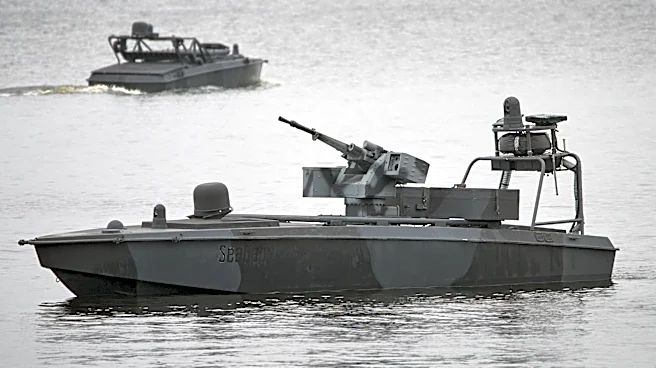
solutions. Silicon Valley-backed startups are at the forefront of this shift, focusing on rapid deployment and affordable systems. Companies like Ark Robotics are developing autonomous robots that can be quickly adapted based on battlefield feedback. This new approach emphasizes the use of mass, affordable systems orchestrated with artificial intelligence, marking a departure from the reliance on expensive platforms and precision strikes. The urgency for this shift is underscored by economic realities, as highlighted by industry experts who note that historical wars have been won on economic grounds. The introduction of platforms like Tiberius Aerospace's GRAIL, which separates design from manufacturing, exemplifies this new defense-as-a-service model, aiming to reduce costs and increase efficiency.
Why It's Important?
This shift in defense strategy has significant implications for the U.S. and its allies. The ability to produce low-cost, scalable warfare equipment could provide a strategic advantage, especially as geopolitical tensions fluctuate. The new model allows for rapid iteration and deployment, contrasting sharply with the lengthy processes of legacy contractors. This approach not only promises to reduce defense budgets but also enhances the ability to respond swiftly to emerging threats. The increased transparency and efficiency in the defense marketplace are attracting more investors, changing the traditional reluctance of Silicon Valley to engage in defense projects. As a result, the defense industry is poised for a transformation that could redefine military capabilities and economic strategies.
What's Next?
The ongoing developments suggest a continued evolution in defense strategies, with a focus on integrating technology and innovation. Companies are likely to further explore the separation of design and manufacturing to enhance efficiency and reduce costs. The success of platforms like GRAIL could lead to broader adoption of defense-as-a-service models, potentially reshaping the defense industry landscape. As geopolitical tensions persist, the demand for rapid, cost-effective solutions is expected to grow, driving further investment and innovation in this sector. The U.S. and its allies may increasingly rely on these new models to maintain strategic advantages and address emerging threats effectively.