







What's Happening?
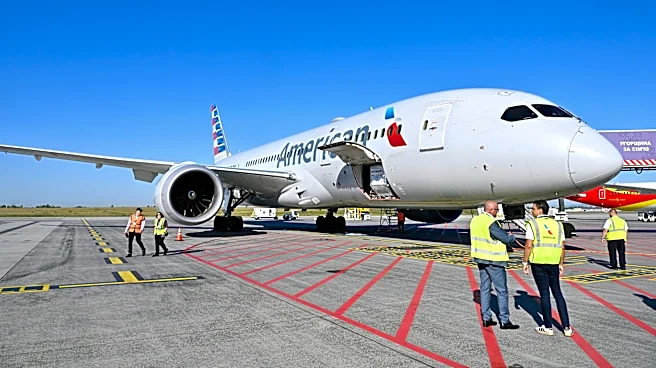
American Airlines, along with other major carriers like Air Canada, Delta, and United, is reducing its flight routes due to escalating jet fuel prices. The cuts are primarily affecting routes connected to California, with American Airlines suspending
six domestic routes from August to September. This decision is part of a broader industry trend where airlines are adjusting their operations in response to the increased costs associated with the ongoing Iran conflict, which has disrupted oil markets. Air Canada has also announced temporary route suspensions, with plans to resume some services in late 2026 and 2027. Delta and United have similarly adjusted their schedules, with Delta planning to resume some routes in July and September, and United expecting a full schedule resumption in the fall.
Why It's Important?
The reduction in flight routes by major airlines highlights the significant impact of rising fuel costs on the aviation industry. Jet fuel prices, which account for a substantial portion of airline operating costs, have surged due to geopolitical tensions, particularly the Iran conflict. This has forced airlines to reassess the viability of certain routes, especially those with lower profit margins. For travelers, this means fewer direct flight options, potentially longer travel times due to increased connections, and possibly higher ticket prices as airlines seek to offset the increased costs. The situation underscores the vulnerability of the airline industry to fluctuations in fuel prices and geopolitical events.
What's Next?
The future of these route adjustments largely depends on the trajectory of fuel prices. If prices stabilize or decrease, airlines may restore some of the suspended routes. However, if high prices persist, further adjustments and route suspensions could occur. Airlines are likely to continue monitoring the situation closely and may implement additional cost-saving measures, such as increasing ticket prices or adding fuel surcharges. The industry will also be watching for any developments in the geopolitical landscape that could affect oil supply and prices.