
What's Happening?
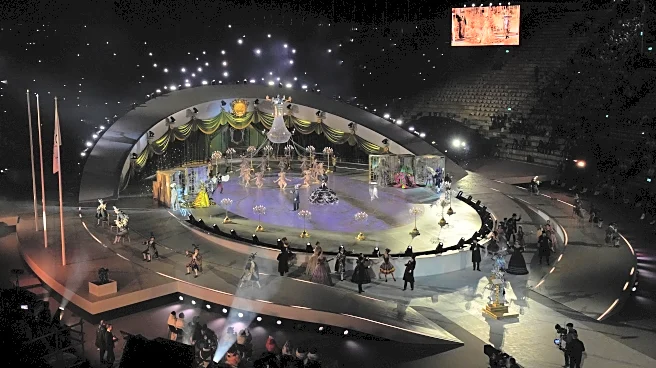
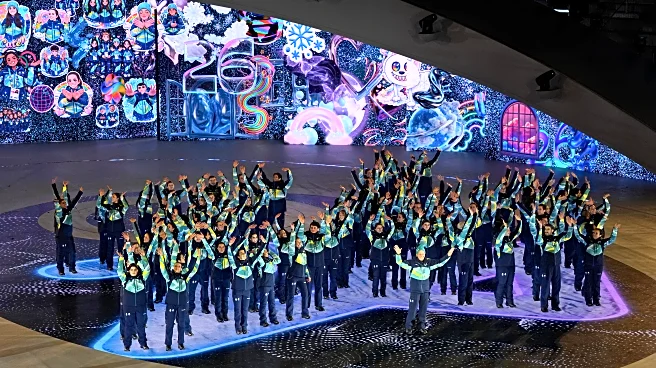
The 2026 Milan-Cortina Winter Olympics concluded with a mix of record-breaking performances, romantic proposals, and controversies. Norway emerged as the top medal winner, with cross-country skier Johannes Hoesflot Klaebo setting a new record for the most
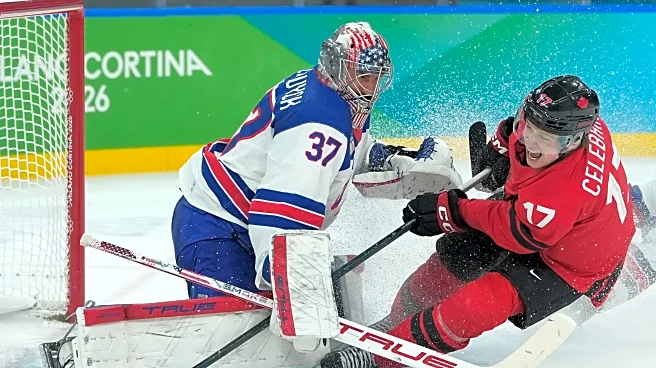
Winter Olympic gold medals. The U.S. also had notable successes, including Mikaela Shiffrin's gold in slalom and Alysa Liu's historic win in figure skating. However, the Games were not without controversy, as accusations of cheating marred the curling competition, and Ukrainian sledder Vladyslav Heraskevych faced disqualification for wearing a politically charged helmet. The event also saw romantic moments, with U.S. athletes Breezy Johnson and Hilary Knight receiving marriage proposals.
Why It's Important?
The Milan-Cortina Games highlighted the evolving nature of the Winter Olympics, showcasing both athletic excellence and the personal stories of athletes. The controversies and political statements made during the Games reflect broader global tensions, particularly regarding the ongoing conflict in Ukraine. The romantic engagements and personal achievements of athletes add a human element to the event, making it relatable to a wider audience. These elements combined contribute to the legacy of the Games, influencing future Olympic events and the public's perception of international sports competitions.
What's Next?
As the Olympic flame is extinguished in Milan, attention turns to the next Winter Games and the upcoming 2028 Summer Olympics in Los Angeles. Organizers will likely reflect on the successes and challenges of the Milan-Cortina Games to improve future events. The controversies surrounding the Games may prompt discussions within the International Olympic Committee about the role of political statements and athlete conduct. Additionally, the personal stories and achievements from these Games will continue to inspire athletes and fans worldwide.