





What's Happening?
The global airline industry is grappling with increased fuel costs due to geopolitical tensions in the Middle East, particularly around Iran. The conflict, which began at the end of February, has led to oil price volatility, with crude oil prices surpassing
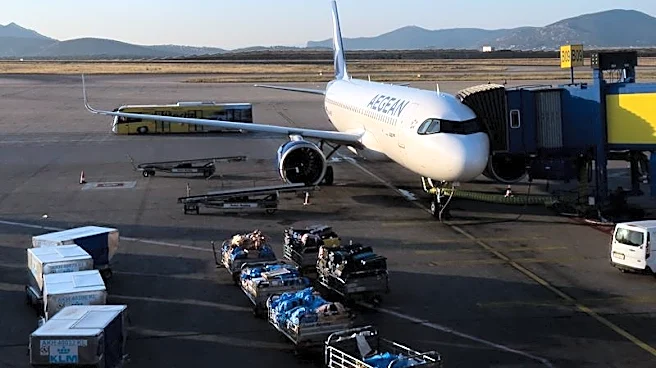
$100 per barrel. This has significantly impacted airlines, including Delta Air Lines, which reported a 14% increase in fuel costs for the first quarter, resulting in a net loss of $289 million. Delta plans to reduce capacity growth, especially in less profitable segments, until the fuel situation stabilizes. European airports are also concerned about potential jet fuel shortages if the Strait of Hormuz remains blocked. Meanwhile, London Heathrow reported a decline in Middle East flight passengers but saw an overall increase in traffic due to a rise in Asia-Pacific flights.
Why It's Important?
The rising fuel costs are a major concern for the airline industry, affecting profitability and operational strategies. Airlines are forced to adjust capacity and increase fuel surcharges, which could lead to higher ticket prices for consumers. The situation underscores the vulnerability of the airline industry to geopolitical events and the critical importance of stable fuel supplies. The potential for a systematic jet fuel shortage in Europe could disrupt air travel and economic activities, highlighting the interconnectedness of global markets. The ongoing conflict and its impact on fuel prices could have long-term implications for airline operations and financial performance.
What's Next?
Airlines and airports are preparing for further disruptions as the European Commission's new Schengen Entry Exit System is implemented, which may cause operational challenges. The industry is closely monitoring the situation in the Middle East, hoping for a resolution that would stabilize fuel prices. Airlines are likely to continue adjusting their capacity and pricing strategies in response to the evolving situation. The European Union may need to explore alternative fuel supply routes to mitigate the risk of shortages. Stakeholders will be watching for any diplomatic developments that could ease tensions and restore normalcy to the region.