



What's Happening?
Simon Willison, co-creator of the Django web framework, has highlighted a significant shift in the use of artificial intelligence (AI) in the workplace, particularly in coding and factory automation. During a recent podcast, Willison discussed the concept
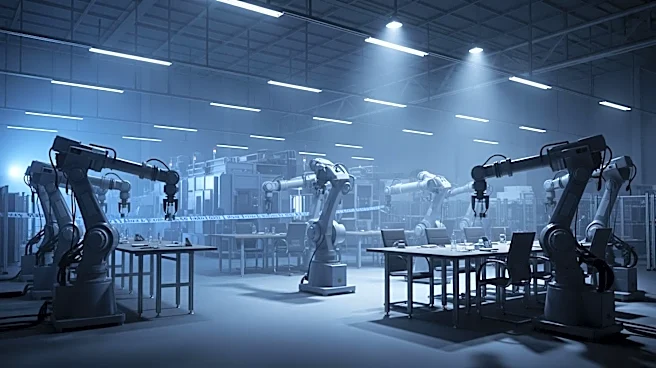
of the 'dark factory,' where automation is so advanced that human presence is unnecessary, allowing operations to continue in complete darkness. This development comes as AI technology has rapidly progressed, enabling machines to perform tasks traditionally done by humans. Willison noted that many companies, including major firms like Klarna, IBM, Block, and Oracle, have attributed recent layoffs to AI advancements. He also mentioned that a significant portion of his coding work is now done by AI, reflecting a broader trend where AI tools are increasingly relied upon to perform complex tasks.
Why It's Important?
The rise of the 'dark factory' concept underscores a pivotal moment in the integration of AI into the workforce, raising critical questions about the future of employment. While AI has the potential to create new job opportunities, there is growing concern that it could also lead to significant job displacement. The ability of AI to perform tasks without human intervention could result in reduced demand for human labor, particularly in industries heavily reliant on automation. This shift could have profound implications for the economy, as companies may prioritize cost savings over job creation. The debate over AI's role in the workforce highlights the need for policies that balance technological advancement with job security and economic stability.
What's Next?
As AI continues to evolve, businesses and policymakers will need to address the challenges and opportunities it presents. Companies may need to invest in retraining programs to help workers adapt to new roles created by AI technologies. Additionally, there may be increased pressure on governments to implement regulations that ensure ethical AI use and protect workers' rights. The ongoing dialogue about AI's impact on employment will likely influence future labor policies and economic strategies. Stakeholders, including industry leaders, labor unions, and policymakers, will need to collaborate to navigate the complexities of AI integration in the workforce.
Beyond the Headlines
The ethical implications of AI-driven automation extend beyond immediate economic concerns. The potential for AI to operate independently raises questions about accountability and decision-making in automated systems. As machines take on more responsibilities, ensuring transparency and fairness in AI operations becomes crucial. Moreover, the cultural shift towards automation may alter societal perceptions of work and productivity, challenging traditional notions of employment and human contribution. These broader implications highlight the need for a comprehensive approach to AI governance that considers both technological capabilities and human values.