





What's Happening?
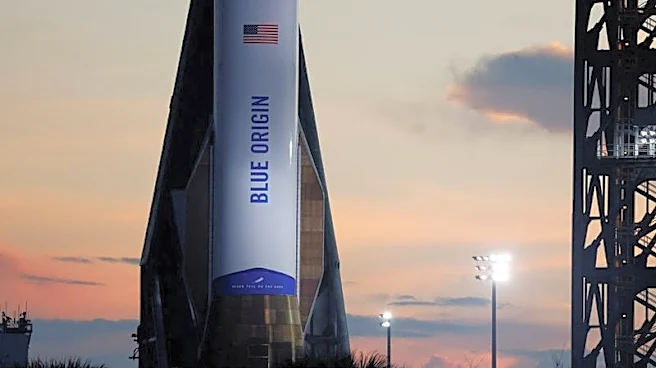
Blue Origin is set to launch its New Glenn rocket for the third time, marking the first instance of reusing a previously flown hardware stage. The mission, named NG-3, will deliver the BlueBird 7 satellite to low Earth orbit. This launch is significant
as it involves the reuse of the first-stage booster core, albeit with new engines. The launch is scheduled from Cape Canaveral Space Force Station in Florida. The mission aims to demonstrate the reusability of the New Glenn's first stage, a capability that would allow Blue Origin to compete with SpaceX's reusable rockets. The first stage is designed to land on a droneship in the Atlantic Ocean post-launch.
Why It's Important?
The successful reuse of the New Glenn rocket's first stage is a critical step for Blue Origin in establishing itself as a competitor in the commercial spaceflight industry. Reusability is a key factor in reducing launch costs and increasing the frequency of missions. This development could enhance Blue Origin's ability to secure contracts for future space missions, including those related to NASA's Artemis program. The competition with SpaceX, which has already demonstrated reusability with its Falcon rockets, could drive innovation and cost-effectiveness in the space industry, benefiting both commercial and governmental space endeavors.
What's Next?
If the NG-3 mission is successful, Blue Origin plans to continue refining the reusability of its New Glenn rocket stages. Future missions will likely involve further testing and potential upgrades to the rocket's components. The company aims to achieve a stage that can be reused at least 25 times, which would significantly enhance its operational capabilities. Additionally, Blue Origin's success in this area could influence NASA's decisions regarding partnerships for lunar missions under the Artemis program, potentially increasing Blue Origin's role in future space exploration efforts.