



What's Happening?
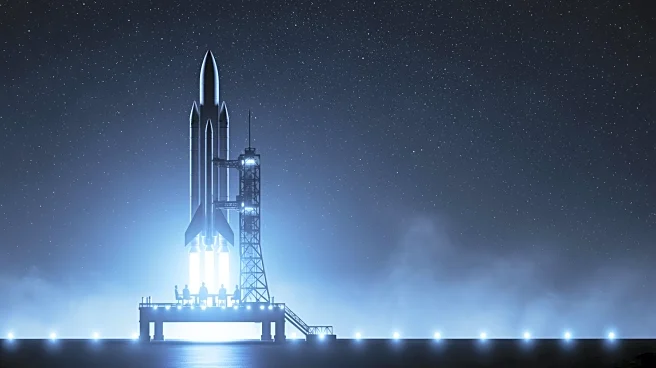
SpaceX has set a new record for the number of launches in a single year, achieving 170 missions in 2025. This includes 165 flights of its Falcon 9 rocket and five suborbital test missions of the Starship vehicle. The majority of these launches, over 70%, were dedicated to expanding SpaceX's Starlink megaconstellation, which now comprises more than 9,000 operational satellites. This marks the sixth consecutive year that SpaceX has broken its own launch record, with the number of launches increasing from 25 in 2020 to 172 expected by the end of 2025. The company's continued success in launching and testing its reusable rockets underscores its leadership in the commercial spaceflight industry.
Why It's Important?
SpaceX's achievement in breaking its launch record is
significant for several reasons. It highlights the company's growing dominance in the commercial space sector, particularly in satellite deployment and reusable rocket technology. The expansion of the Starlink constellation is crucial for global internet coverage, potentially transforming internet access in remote and underserved areas. Additionally, the successful test flights of the Starship vehicle are pivotal for future missions to the Moon and Mars, aligning with SpaceX's long-term vision of making space travel more accessible and sustainable. This progress could have far-reaching implications for space exploration, international collaboration, and the commercial space market.
What's Next?
Looking ahead, SpaceX plans to continue its aggressive launch schedule, with two more Falcon 9 missions anticipated before the end of 2025. The company is also focused on further developing the Starship vehicle, which is expected to play a key role in NASA's Artemis program and other deep space missions. As SpaceX continues to innovate and expand its capabilities, it may face increased competition from other private space companies and international space agencies. The ongoing advancements in reusable rocket technology and satellite deployment could lead to new opportunities and challenges in the space industry.