


What's Happening?
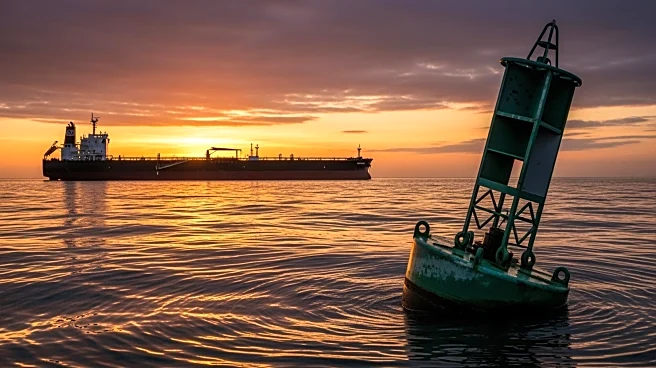
Daily charter rates for Very Large Crude Carriers (VLCC) on the Middle East to Asia route have soared to levels not seen since the COVID-19 pandemic in 2020. According to LSEG Data & Analytics, the rates have reached $170,000 per day, with some reports
from Bloomberg and tanker owner Frontline indicating rates as high as $200,000. Tankers International noted that the VLCC DHT Jaguar was chartered by Saudi shipper Bahri for $208,000 per day. This surge is attributed to increased crude exports from the Middle East, influenced by sanctions on Russia and Iran, geopolitical uncertainties, and stock-building activities. Additionally, the market is experiencing pressure from a significant position held by South Korean tanker giant Sinokor. Despite the high short-term rates, one-year charter rates have also increased, with the VLCC DHT Redwood being chartered for $105,000 per day.
Why It's Important?
The rise in VLCC charter rates has significant implications for global oil transportation costs, potentially affecting oil prices and the broader energy market. The increased rates reflect heightened demand for oil transport amidst geopolitical tensions and sanctions, particularly involving Russia and Iran. This situation could lead to higher costs for oil-importing countries, impacting their economies and energy policies. Additionally, the pressure on VLCC availability suggests a tightening market, which could drive further investments in tanker capacity. Companies like Mercuria and Bahri are already responding by purchasing new tankers, indicating a strategic move to capitalize on the current market dynamics.
What's Next?
As the market adjusts to these high charter rates, stakeholders in the oil and shipping industries may seek to secure long-term contracts to hedge against future rate volatility. The continued geopolitical tensions and sanctions could sustain the demand for VLCCs, potentially leading to further investments in tanker fleets. Companies may also explore alternative routes or shipping methods to mitigate costs. Additionally, the situation could prompt discussions among oil-producing nations and shipping companies to address the underlying factors driving these rate increases.