



What's Happening?
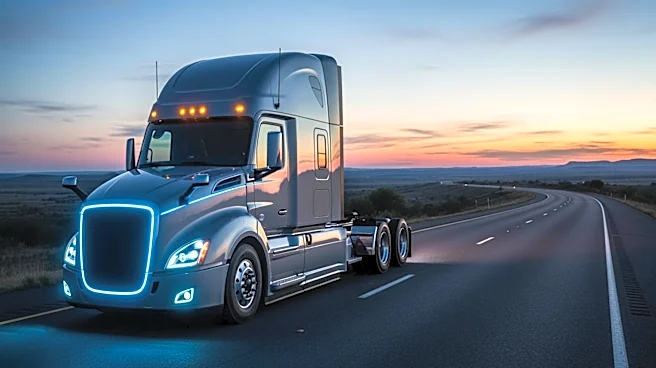
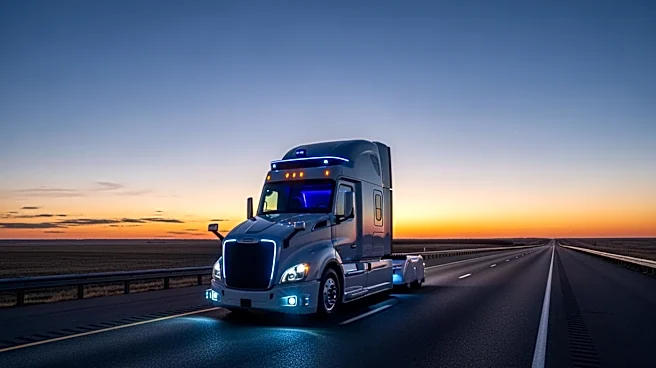
Ryder System and International Motors have initiated a joint autonomous truck pilot program in Texas, utilizing a factory-integrated International LT equipped with PlusAI's SuperDrive software. This pilot involves a 600-mile route from Laredo to Temple,
Texas, where the truck autonomously hauls freight. The collaboration marks a significant step in integrating autonomous technology into existing freight operations. International Motors has been developing its autonomous capabilities since 2024, and Ryder is the first official partner in this trial program. The pilot aims to demonstrate the feasibility of adding autonomous technology to existing logistics routes, with a safety driver currently in place to oversee operations. The companies are also focusing on improving fuel efficiency and operational processes, with plans to eventually operate without a safety driver by the end of 2027.
Why It's Important?
The introduction of autonomous trucks in freight operations could significantly impact the logistics industry by enhancing efficiency and reducing operational costs. For Ryder and International Motors, this pilot represents a strategic move to stay competitive in a rapidly evolving market. Autonomous technology promises to address driver shortages and improve fuel efficiency, which are critical issues in the trucking industry. Successful implementation could lead to broader adoption of autonomous vehicles, potentially transforming supply chain logistics and reducing reliance on human drivers. This development also highlights the growing importance of technology in traditional industries, pushing companies to innovate and adapt to new technological advancements.
What's Next?
As the pilot progresses, Ryder and International Motors plan to refine their autonomous trucking capabilities and expand the program. The companies are considering moving inspection processes to Ryder sites and exploring further integration of autonomous technology into their operations. The collaboration is ongoing, with no set end date, allowing both companies to continue learning and improving their systems. The ultimate goal is to operate without a safety driver, which would mark a significant milestone in the adoption of autonomous vehicles in freight transportation. Stakeholders in the logistics and transportation sectors will be closely monitoring the outcomes of this pilot as it could set a precedent for future autonomous vehicle deployments.