



What's Happening?
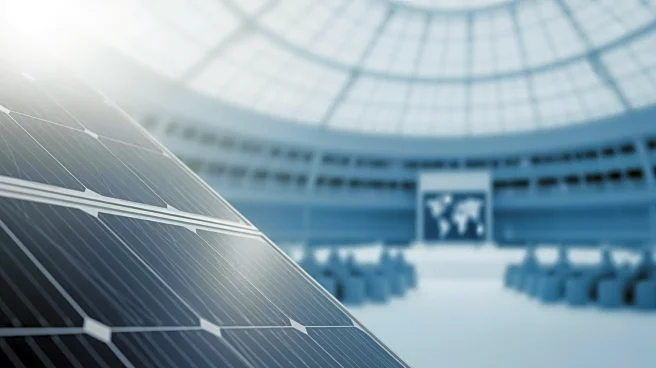
Elon Musk made his debut at the World Economic Forum in Davos, where he criticized U.S. tariffs on solar power, arguing they hinder the economic viability of solar energy deployment. During an interview with Larry Fink, Musk highlighted the potential for the U.S. to meet its electricity needs through solar power, but noted that high tariffs create artificial barriers. Musk's comments come amid his broader advocacy for renewable energy and his leadership in companies like Tesla and SpaceX. The discussion also touched on topics such as robotics, AI, and Musk's vision for sustainable energy.
Why It's Important?
Musk's critique of U.S. solar tariffs underscores the ongoing debate over renewable energy policy in the United States. His comments highlight the tension between
government policies and the private sector's push for sustainable energy solutions. The tariffs, intended to protect domestic manufacturers, may inadvertently slow the adoption of solar technology, impacting the U.S.'s ability to transition to cleaner energy sources. Musk's high-profile stance could influence public opinion and policy discussions, potentially leading to a reevaluation of tariff structures to better support renewable energy growth.
What's Next?
Musk's remarks may prompt further dialogue among policymakers, industry leaders, and environmental advocates regarding the balance between protecting domestic industries and promoting renewable energy. The U.S. government could face pressure to reconsider its tariff policies to align with broader climate goals. Additionally, Musk's companies may continue to advocate for policy changes that facilitate the expansion of solar power and other renewable technologies. The outcome of these discussions could shape the future landscape of the U.S. energy sector, influencing investment and innovation in clean energy.