


What's Happening?
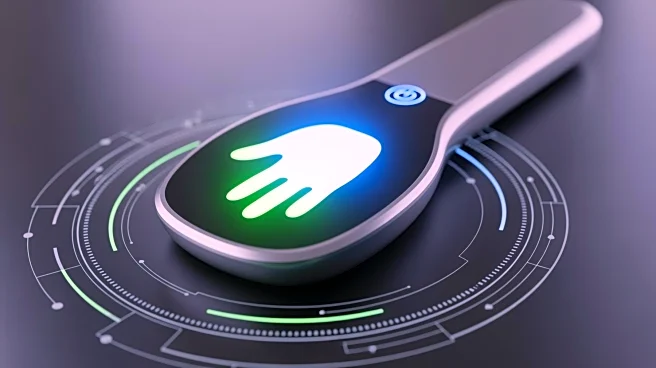
Tencent Cloud, in collaboration with Brazilian fintech company Treeal, has introduced a palm-scanning payment solution called PalmAI in Brazil. This biometric system identifies unique vein patterns beneath the skin, offering a more reliable alternative to fingerprint and facial recognition systems. The technology allows for payments without the need for a card or smartphone, claiming higher reliability due to its resistance to spoofing and environmental constraints. Treeal's implementation of PalmAI boasts a user identification time of less than 300 milliseconds, with extremely low false acceptance and rejection rates. The system is already in use in several Asian markets and is being tested for various applications, including transit locations
and retail self-checkouts.
Why It's Important?
The introduction of PalmAI in Brazil signifies a shift towards more secure and efficient biometric payment systems. This technology could potentially reduce fraud and enhance user convenience, impacting the financial and retail sectors significantly. By eliminating the need for physical cards or smartphones, PalmAI addresses security vulnerabilities associated with traditional biometric systems. The adoption of such technology could lead to widespread changes in how transactions are conducted, influencing consumer behavior and business operations. As biometric systems become mainstream, they could redefine user experiences across various industries.
What's Next?
As PalmAI gains traction, it is likely to expand beyond Brazil, potentially influencing global payment systems. The success of this technology could prompt other companies to develop similar solutions, increasing competition in the biometric payment market. Regulatory bodies may also need to establish guidelines to ensure the security and privacy of biometric data. Businesses adopting this technology will need to consider infrastructure upgrades and user education to facilitate a smooth transition. The broader acceptance of palm-scanning payments could lead to innovations in other biometric applications, further integrating technology into daily life.