





What's Happening?
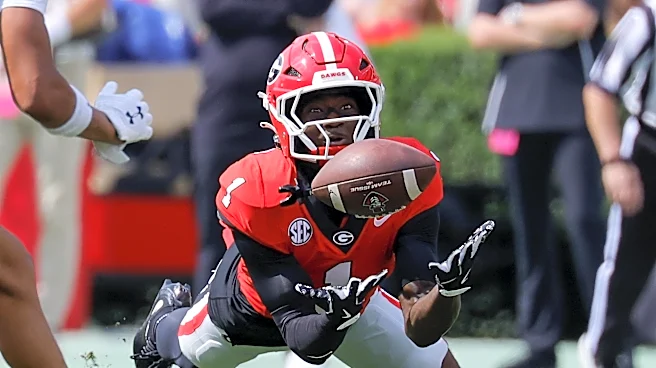
Georgia Bulldogs head coach Kirby Smart has highlighted the increasing youthfulness of his team's roster, noting that the program is starting more freshmen than ever before. This trend is part of a broader shift in college football, influenced by factors
such as Name, Image, and Likeness (NIL) deals and the transfer portal, which have changed how teams acquire and develop talent. Despite potential challenges associated with relying on younger players, Smart's Bulldogs have historically benefited from significant contributions by freshmen. Notable examples include Malaki Starks, who played a key role in securing a national title in 2022, and Brock Bowers, who was a leading receiver in 2021. The Bulldogs' success with young players suggests that the team's current youthful composition may not be a disadvantage.
Why It's Important?
The emphasis on a younger roster by the Georgia Bulldogs reflects a strategic adaptation to the evolving landscape of college football. As programs navigate new dynamics introduced by NIL and the transfer portal, the ability to effectively integrate young talent becomes crucial. Georgia's success with freshmen players demonstrates the potential benefits of this approach, offering a model for other programs facing similar challenges. The Bulldogs' ability to maintain competitive performance with a youthful roster underscores the importance of strong recruitment and player development strategies. This trend may influence how other college football teams approach roster building and talent management in the future.
What's Next?
As the Georgia Bulldogs continue to adapt to the changing college football environment, the focus will remain on developing and integrating young talent into the team. Coach Kirby Smart and his staff are likely to continue leveraging their experience in nurturing freshmen players to maintain the team's competitive edge. The Bulldogs' approach may also prompt other programs to reevaluate their strategies in response to the shifting dynamics of college sports. The ongoing evolution of college football, driven by factors like NIL and the transfer portal, will require teams to remain agile and innovative in their recruitment and development practices.