
What's Happening?
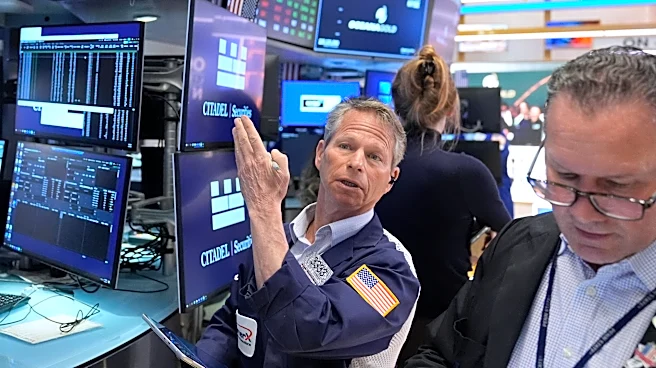
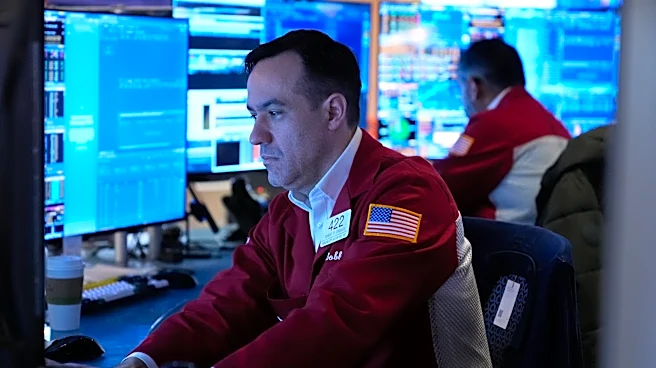
The U.S. stock market experienced fluctuations as investors reacted to the upcoming U.S.-Iran peace talks following a fragile ceasefire agreement. The S&P 500 index saw a slight decline of 0.1%, while
the Dow Jones Industrial Average fell by 0.6%, and the Nasdaq composite rose by 0.4%. Despite these fluctuations, the major indexes recorded weekly gains for the second consecutive week, driven by optimism regarding a potential resolution to the conflict with Iran. The talks are scheduled to take place in Pakistan, with the market remaining sensitive to developments in the conflict. Oil prices, which have been volatile due to disruptions in the Strait of Hormuz, also saw a decrease, with Brent crude oil falling to $95.20 per barrel. The conflict has contributed to rising inflation in the U.S., with the government reporting the largest inflation spike in four years, primarily due to increased gas prices.
Why It's Important?
The ongoing conflict between the U.S. and Iran has significant implications for the U.S. economy and global markets. The uncertainty surrounding the peace talks and the potential for a resolution could impact investor confidence and market stability. The conflict has already led to increased oil prices, which have contributed to inflationary pressures in the U.S. economy. Rising inflation affects consumer purchasing power and could lead to higher costs for goods and services. Additionally, the Federal Reserve may face challenges in managing interest rates to balance economic growth and inflation control. The outcome of the peace talks could influence future economic policies and market trends.
What's Next?
The scheduled peace talks between the U.S. and Iran are a critical next step in addressing the conflict. The outcome of these talks could determine the future trajectory of oil prices and inflation rates. If successful, a resolution could stabilize markets and reduce inflationary pressures. However, if the talks fail, continued conflict could exacerbate economic challenges, leading to further market volatility and inflation concerns. Stakeholders, including investors, policymakers, and businesses, will closely monitor the talks and adjust their strategies accordingly.