





What's Happening?
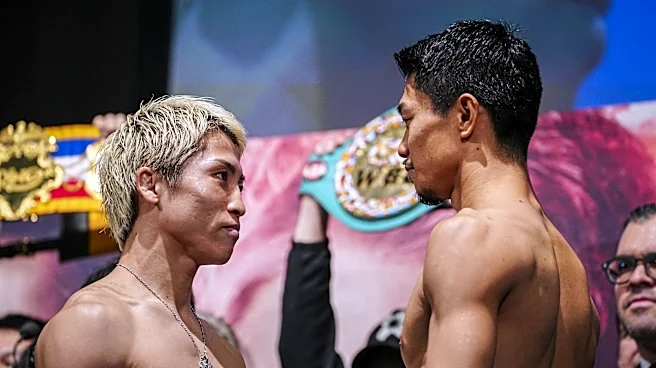
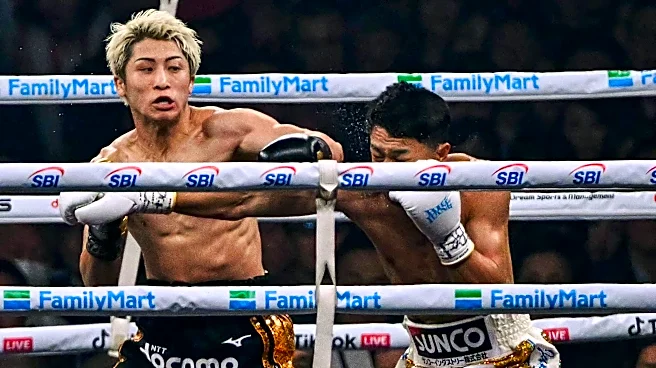
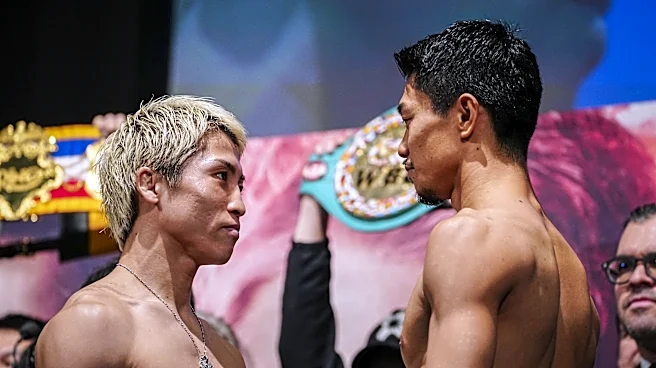
Naoya Inoue successfully defended his undisputed super-bantamweight titles by defeating Junto Nakatani in a unanimous decision in Tokyo. The fight, held at the Tokyo Dome, was one of the most significant events in Japanese boxing history, drawing a sell-out
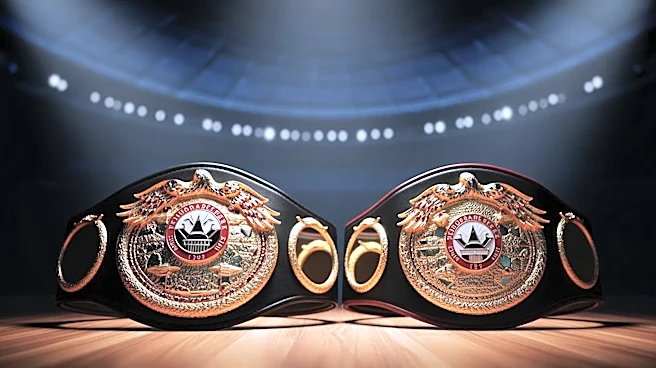
crowd of 55,000. Inoue, known as 'The Monster,' maintained his WBA, WBC, IBF, and WBO belts, with judges scoring the fight 116-112 and 115-113 in his favor. Despite not achieving a knockout, Inoue expressed satisfaction with the victory and praised Nakatani for his strong performance. The bout showcased both fighters' skills, with Nakatani using his reach advantage and Inoue demonstrating quick footwork and defensive prowess.
Why It's Important?
This victory solidifies Naoya Inoue's status as one of Japan's greatest boxers, enhancing his reputation on the international stage. The fight's outcome has significant implications for the boxing community, as it highlights Inoue's dominance in the super-bantamweight division. The event also underscores the growing popularity of boxing in Japan, drawing attention to the sport's cultural significance and the potential for future high-profile matches. For Nakatani, despite the loss, the fight represents a valuable experience against a top-tier opponent, which could influence his future career trajectory.
What's Next?
Following this victory, Naoya Inoue may seek to defend his titles against other top contenders in the super-bantamweight division, potentially setting up more high-stakes matches. For Junto Nakatani, the focus will likely be on recovery and strategizing for future bouts to regain momentum in his career. The success of this event may encourage more international boxing matches to be held in Japan, further boosting the sport's profile in the region.
Beyond the Headlines
The Inoue brothers' success story, with both Naoya and his younger brother Takuma winning their respective matches, highlights the familial and cultural aspects of boxing in Japan. Their achievements may inspire a new generation of Japanese boxers, contributing to the sport's development and popularity. Additionally, the event's success could lead to increased investment in boxing infrastructure and training programs in Japan.