


What's Happening?
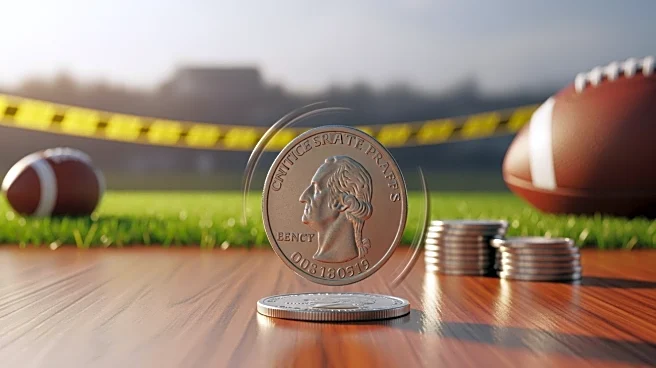
On January 9, 1970, a coin flip determined the fate of the Chicago Bears' draft pick, resulting in the Pittsburgh Steelers securing quarterback Terry Bradshaw. After a 1-13 season, the Bears tied with the Steelers for the worst record in the NFL, necessitating a coin toss to decide the first draft pick. NFL Commissioner Pete Rozelle conducted the ceremony, where Bears representative Ed McCaskey called 'heads,' but the coin landed on 'tails.' Consequently, the Steelers drafted Bradshaw, who went on to lead the team to multiple championships. The Bears, on the other hand, traded their first-round pick to the Green Bay Packers and the Dallas Cowboys for several players, missing out on a future Hall of Famer.
Why It's Important?
The coin flip incident is a pivotal moment
in NFL history, illustrating the impact of chance on team fortunes. Terry Bradshaw's subsequent success with the Steelers, including four Super Bowl victories, underscores what the Bears lost due to the coin toss. This event highlights the unpredictable nature of sports management and the long-term consequences of seemingly minor decisions. For the Bears, missing out on Bradshaw meant a prolonged period without a franchise quarterback, affecting their competitiveness in the league. The story serves as a reminder of the critical role of draft decisions in shaping the future of NFL teams.
Beyond the Headlines
The coin flip that cost the Bears Terry Bradshaw is emblematic of the broader challenges faced by sports franchises in talent acquisition and management. It underscores the importance of strategic planning and the potential for unforeseen events to alter a team's trajectory. The incident also reflects on the historical context of the NFL draft process and its evolution over the years. For fans and historians, it remains a fascinating 'what if' scenario, illustrating how different the league's landscape might have been had the coin landed differently.