






What's Happening?
UCB has announced a significant investment in Neurona Therapeutics, a San Francisco-based company, with an upfront payment of $650 million and an additional $500 million in milestone payments. This investment is aimed at developing a cell therapy for
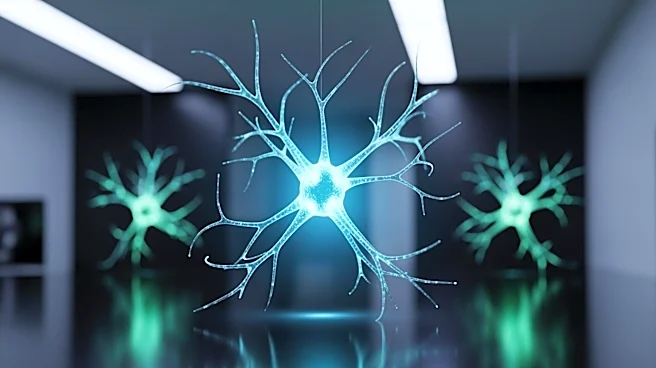
mesial temporal lobe epilepsy, which is both off-the-shelf and potentially curative. Alistair Henry, who leads UCB's R&D organization, emphasized the potential of this therapy to transform treatment from symptomatic relief to a curative approach. Neurona's therapy involves the use of GABAergic interneurons to restore neuronal control, addressing the hyperexcitability characteristic of epilepsy. This approach differs from CAR-T therapies used in oncology, as it introduces regulatory cells to manage neuron excitation. The therapy, if successful in Phase 3 trials, could offer a scalable, one-time treatment for severe epilepsy cases.
Why It's Important?
This investment by UCB highlights a strategic shift towards innovative treatments that could significantly impact the lives of epilepsy patients. The potential for a curative therapy represents a major advancement over current symptomatic treatments, offering hope to patients who are refractory to existing medications. The scalability of Neurona's therapy, due to its off-the-shelf nature, could make it accessible to a broader patient population, potentially reducing the need for invasive surgical options. Success in this venture could pave the way for similar treatments across various types of epilepsy, expanding the therapeutic landscape and improving patient outcomes.
What's Next?
The next steps involve the progression of Neurona's therapy through Phase 3 clinical trials. If successful, this could lead to regulatory approval and commercialization, providing a new treatment option for epilepsy patients. UCB's investment also signals a commitment to exploring further applications of this technology in other forms of epilepsy, potentially broadening its impact. The collaboration between UCB and Neurona may inspire further partnerships in the biotech industry, focusing on translating academic research into practical, patient-centered solutions.