
What's Happening?
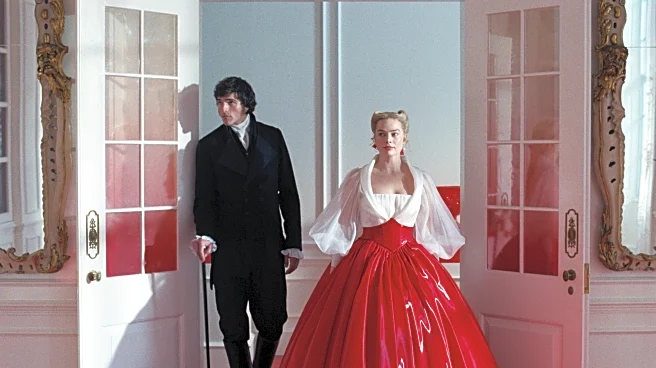
Emerald Fennell has directed a new adaptation of Emily Brontë's 'Wuthering Heights,' which explores the complex and often toxic dynamics of romance. The film, starring Jacob Elordi as Heathcliff, diverges
from the original text by giving more agency to the female characters and softening Heathcliff's brutishness. The story revolves around the tumultuous relationship between Heathcliff and Catherine Earnshaw, characterized by love, betrayal, and revenge. The film highlights the psychological and emotional turmoil that defines their relationship, portraying Heathcliff as both a passionate lover and a deeply flawed individual. Fennell's adaptation also reimagines the character dynamics, particularly between Heathcliff and Isabella, presenting their marriage as mutually diabolical rather than one-sidedly abusive.
Why It's Important?
This adaptation of 'Wuthering Heights' is significant as it revisits a classic literary work through a modern lens, addressing themes of toxic relationships and gender dynamics. By altering character motivations and interactions, the film challenges traditional narratives of romance and highlights the destructive nature of obsessive love. This approach resonates with contemporary discussions about healthy relationships and the impact of media portrayals on societal norms. The film's exploration of these themes may influence viewers' perceptions of romantic relationships, encouraging critical reflection on the narratives they consume.
What's Next?
The release of Fennell's 'Wuthering Heights' is likely to spark discussions about the portrayal of romance in literature and film. Critics and audiences may debate the changes made to the original story and their implications for understanding the characters' motivations. The film could also inspire further adaptations of classic works that address modern social issues, potentially leading to a broader reevaluation of how historical narratives are presented in contemporary media.
Beyond the Headlines
Fennell's adaptation raises questions about the ethical responsibilities of filmmakers when reinterpreting classic literature. By altering key aspects of the story, the film challenges viewers to reconsider the moral complexities of the characters and the societal norms they represent. This approach may encourage audiences to critically engage with the source material and its cultural impact, fostering a deeper understanding of the historical context and its relevance to modern issues.