

What's Happening?
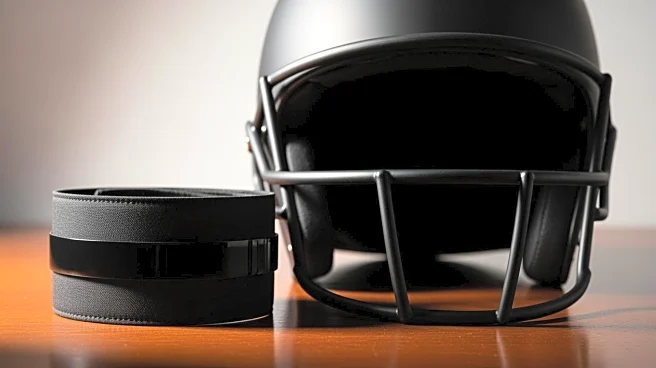
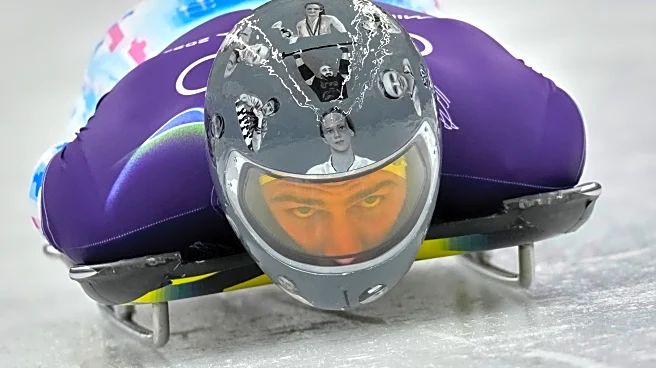
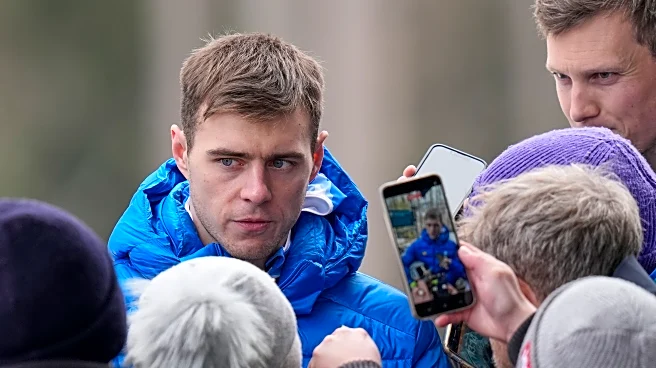
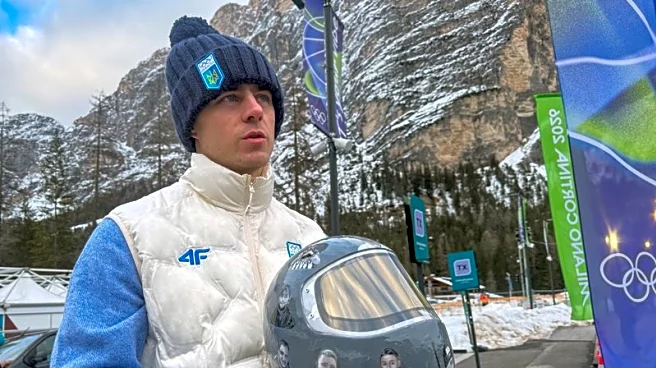
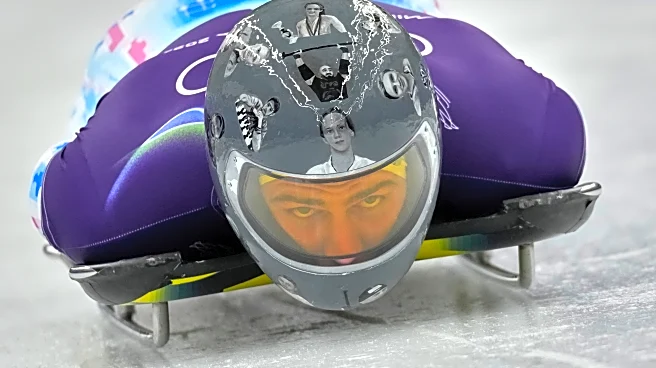
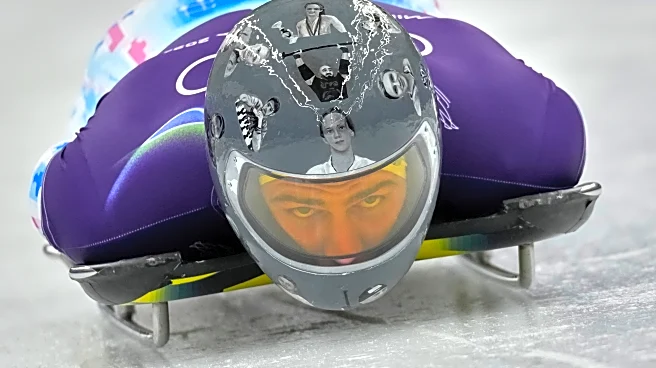
Ukrainian skeleton athlete Vladyslav Heraskevych has announced his intention to wear a helmet honoring 24 Ukrainian athletes who were killed in the ongoing conflict with Russia, despite a ban from the International Olympic Committee (IOC). The IOC has prohibited the helmet, citing rules against political statements during competition. Heraskevych, however, argues that wearing a black armband, as suggested by the IOC, does not adequately honor the memory of the deceased athletes. This decision comes amid heightened tensions and ongoing conflict in Ukraine, drawing attention to the intersection of sports and political expression.
Why It's Important?
This incident highlights the ongoing debate over the role of political expression in sports, particularly at international
events like the Olympics. The IOC's decision to ban the helmet underscores the organization's strict policies on political neutrality. However, Heraskevych's defiance brings attention to the personal and national significance of the conflict in Ukraine, potentially influencing public opinion and international awareness. The situation also raises questions about the balance between athletes' rights to personal expression and the rules governing international sports competitions.
What's Next?
As Heraskevych plans to proceed with wearing the helmet, the IOC may face increased scrutiny and pressure to reconsider its stance on political expressions. This could lead to broader discussions within the Olympic community about the rules governing athlete expression and the potential need for policy adjustments. Additionally, the situation may prompt other athletes to express solidarity or take similar actions, potentially leading to further confrontations with Olympic authorities.