



What's Happening?
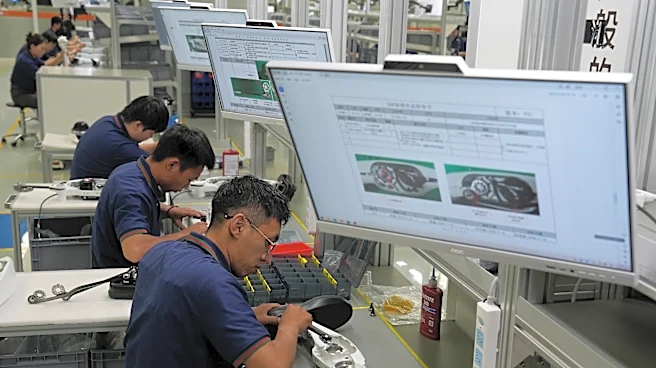
Manufacturers are increasingly integrating robots into their operations to enhance rather than replace human workers. This shift is driven by the need for improved quality and efficiency in production processes. According to the International Federation
of Robotics, the number of robots installed globally has more than doubled over the past decade, reaching 542,000 units in 2024. The focus is on human-in-the-loop approaches, where robots work alongside humans to augment their capabilities. This approach requires manufacturers to rethink their processes and invest in training and reskilling their workforce to work effectively with AI-powered systems.
Why It's Important?
The integration of robots in manufacturing is significant as it addresses the misconception that automation leads to job losses. Instead, robots are seen as tools that can enhance human capabilities and bring more people into the workforce. This approach can lead to a more inclusive and collaborative work environment, where strategic thinking, problem-solving, and creativity are valued. As manufacturers adopt AI and robotics, they must prioritize safety, quality, and productivity, ensuring that human welfare is not compromised. This shift could redefine the manufacturing industry, making it more resilient and adaptable to technological advancements.
What's Next?
Manufacturers are expected to continue investing in reskilling and training programs to prepare their workforce for the next phase of AI integration. This includes developing a hierarchy of priorities that govern how AI and robotics are deployed, with safety as the top priority. As AI technology evolves, manufacturers will need to remain flexible and adjust their processes to maximize return on investment. The focus will be on creating a future-forward workforce that collaborates with robots, rather than competing against them.