

What's Happening?
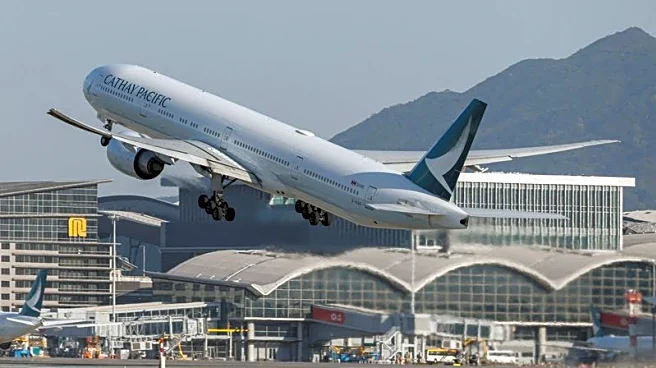
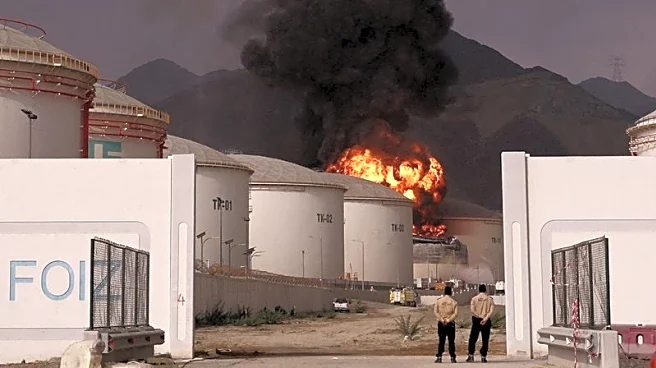
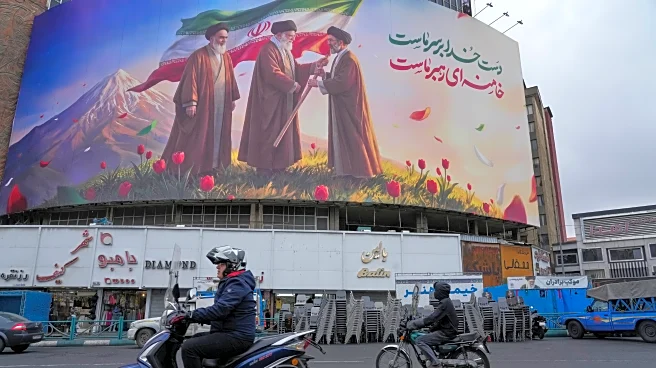
The recent U.S.-Israeli military strikes on Iran have led to significant disruptions in air travel, with over 43,000 flights canceled out of approximately 78,500 scheduled flights due to airspace closures in the Middle East. This situation has highlighted
a gap between the travel industry's investment in AI-powered customer service and the actual reliance on human agents during crises. Despite heavy investments in AI for customer service, major travel companies have primarily depended on human agents to manage the crisis, resulting in long wait times and customer frustration. Only a few companies, such as Air India Express and Expedia, have referenced or utilized AI in their crisis response, but even then, AI has often failed to resolve complex issues. Travelers have resorted to self-organized group chats and informal networks to share updates and arrange evacuations, underscoring the inadequacies in official support.
Why It's Important?
The reliance on human agents over AI during the Middle East airspace crisis underscores the limitations of current AI technologies in handling complex, real-time customer service issues. This situation reveals a significant gap between the marketing promises of AI efficiency and the reality faced by consumers during emergencies. The travel industry's struggle to effectively deploy AI in crisis management could lead to a reevaluation of AI's role in customer service, potentially impacting future investments and strategies. The frustration experienced by travelers may also influence consumer trust and satisfaction, affecting the reputation and customer loyalty of travel companies. This event highlights the need for a balanced approach that integrates both human and AI resources to enhance crisis response capabilities.
What's Next?
As the travel industry assesses the impact of the Middle East airspace crisis, companies may need to reconsider their reliance on AI for customer service. There could be increased investment in training human agents and developing more robust AI systems capable of handling complex scenarios. Travel companies might also explore hybrid models that combine AI efficiency with human empathy to improve crisis management. Additionally, there may be a push for better communication strategies and support networks to ensure travelers receive timely and accurate information during disruptions. The industry will likely face pressure to enhance its crisis response mechanisms to prevent similar issues in the future.
Beyond the Headlines
The current crisis highlights broader implications for the travel industry and AI technology. It raises ethical questions about the over-reliance on AI and the potential neglect of human elements in customer service. The situation may prompt discussions on the ethical deployment of AI, ensuring that technology serves to enhance rather than replace human interaction. Furthermore, the crisis could lead to long-term shifts in how travel companies approach customer service, emphasizing the importance of human touch in maintaining customer trust and satisfaction. This event may also influence regulatory discussions on AI use in critical industries, potentially leading to new guidelines and standards.