
What's Happening?
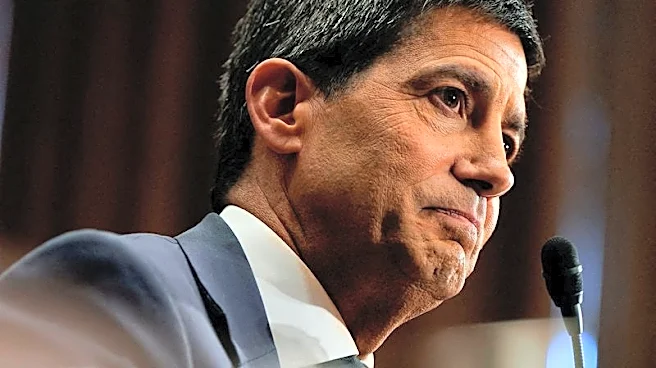
Jamie Dimon, CEO of JPMorgan Chase, has raised concerns about the U.S. economy's vulnerabilities, particularly focusing on the challenges posed by leveraged corporate debt and the difficulties of refinancing
at current elevated interest rates. In a recent interview and his annual letter to shareholders, Dimon highlighted the risks associated with $5-6 trillion in leveraged loans that may face refinancing hurdles. He also pointed out geopolitical tensions, such as the Iran conflict, and the potential for persistent inflation or a recession. Dimon's warnings have been amplified by a viral social media post, drawing parallels to pre-crisis periods like 2008. Despite these concerns, Dimon did not predict an imminent financial crisis but emphasized the need for caution given the current economic conditions.
Why It's Important?
Dimon's warnings underscore significant risks for the U.S. economy, particularly in the corporate debt market. The potential refinancing crunch could lead to increased defaults and financial instability, affecting both businesses and investors. The Federal Reserve's interest rate policies are crucial in this context, as high rates make refinancing more expensive and challenging. The situation also highlights the interconnectedness of global geopolitical events and domestic economic stability. Companies with strong balance sheets and those involved in restructuring could find opportunities in this environment, while others may face significant financial strain. The broader implications for the real estate market and energy sector also suggest potential shifts in investment and operational strategies.
What's Next?
The Federal Reserve's future actions regarding interest rates will be closely watched, especially with the recent appointment of a new Fed Chair, Kevin Warsh. While there is hope for eventual rate cuts, current inflationary pressures and geopolitical risks suggest that immediate reductions are unlikely. Companies and investors will need to navigate these challenges carefully, potentially adjusting their strategies to manage refinancing risks and capitalize on distressed opportunities. The real estate market, in particular, may experience continued pressure until inflation is controlled and rates stabilize.