



What's Happening?
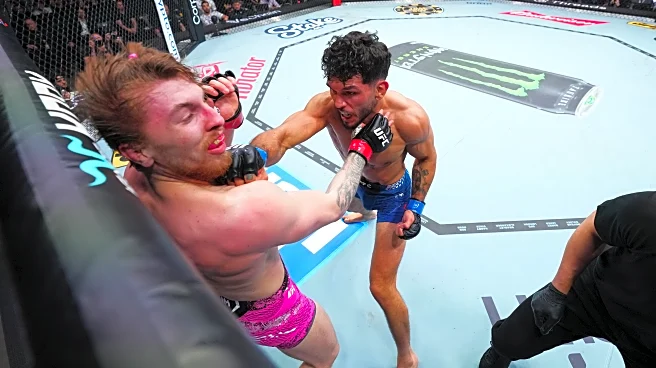
During the UFC London event, fighter Danny Silva made headlines not only for his victory but also for his post-fight admission of financial struggles. Silva, who defeated British featherweight prospect Kurtis Campbell, revealed in his Octagon interview
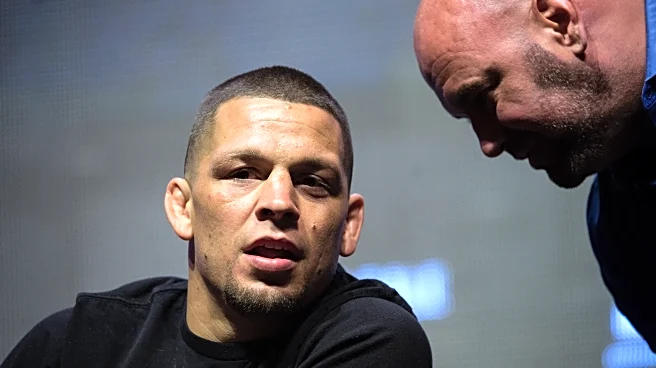
that he is 'broke' and needs money to fund future fight camps. This statement has reignited discussions about fighter pay in the UFC, with fans expressing frustration over the financial difficulties faced by fighters in the leading MMA promotion. The incident has led to calls for UFC CEO Dana White to address and improve fighter compensation.
Why It's Important?
The issue of fighter pay in the UFC has been a longstanding topic of debate, with many arguing that athletes in the organization are undercompensated despite the sport's growing popularity and revenue. Silva's public admission highlights the financial challenges faced by fighters, particularly those who are not at the top of the rankings. This situation underscores the need for a reevaluation of pay structures within the UFC to ensure that fighters can sustain their careers and livelihoods. The broader implications could affect the UFC's reputation and its ability to attract and retain talent if financial concerns are not addressed.
What's Next?
The public outcry following Silva's comments may prompt further scrutiny of the UFC's pay practices. Stakeholders, including fighters, fans, and possibly regulatory bodies, might push for transparency and reforms in how fighters are compensated. Dana White and the UFC could face increased pressure to implement changes that ensure fair pay for all fighters, potentially leading to negotiations or policy adjustments. The situation could also inspire fighters to unite and advocate for better financial terms collectively.