
What's Happening?
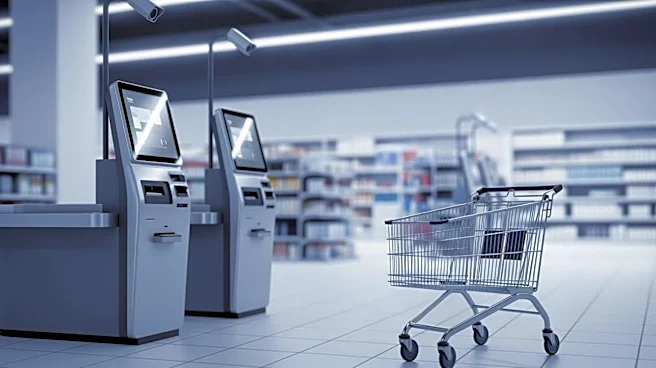
Walmart is scaling back its use of self-checkout machines in response to increasing theft across its U.S. stores. The retail giant has begun removing these machines from certain locations, including a store in South
Philadelphia, as part of a broader strategy to enhance customer service and reduce losses. This move is part of Walmart's plan to remodel over 650 stores, shifting focus from self-service to more staffed checkouts. The decision comes amid reports that self-checkout theft, including deliberate and accidental mis-scans, has been on the rise, with losses at self-checkouts reaching up to 4% of transactions compared to 0.2% at staffed tills. Other retailers like Target and Costco are also reconsidering their self-checkout strategies, implementing stricter rules or removing machines entirely.
Why It's Important?
The reduction of self-checkouts by Walmart highlights a significant shift in retail operations, driven by the need to combat theft and improve customer experience. Retail theft has become a major issue, with the National Retail Federation reporting a $90 billion loss in retail shrink in 2025, largely due to theft. The high loss rates associated with self-checkouts have prompted retailers to rethink their strategies, potentially impacting the future of automated retail technology. This shift could lead to increased employment opportunities as more staffed checkouts are introduced, but it also raises questions about the balance between technology and human interaction in retail environments.
What's Next?
As Walmart and other retailers continue to adjust their checkout strategies, lawmakers in several states, including California and New York, are considering new regulations to address self-checkout misuse. These potential laws could include limits on the number of items allowed at self-checkouts and minimum staffing requirements. While self-checkouts are not being eliminated entirely, with Walmart investing in alternatives like Scan & Go technology, the future of retail checkout systems remains uncertain. The industry will likely see continued innovation and regulatory changes as retailers seek to balance efficiency, security, and customer satisfaction.