




What's Happening?
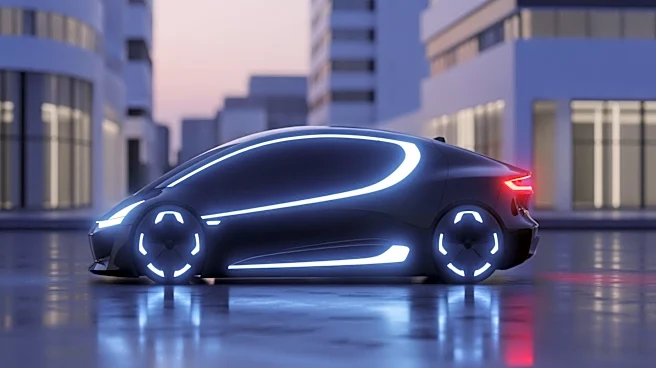
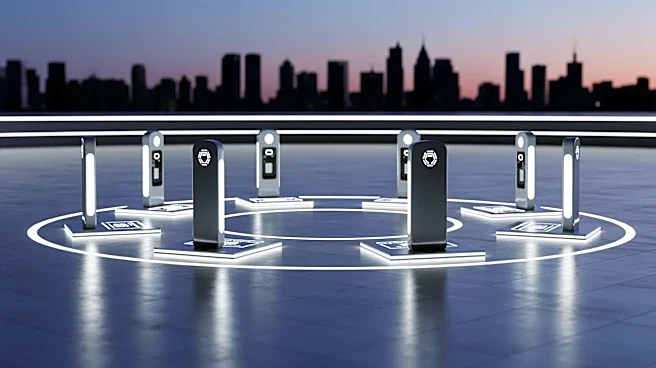
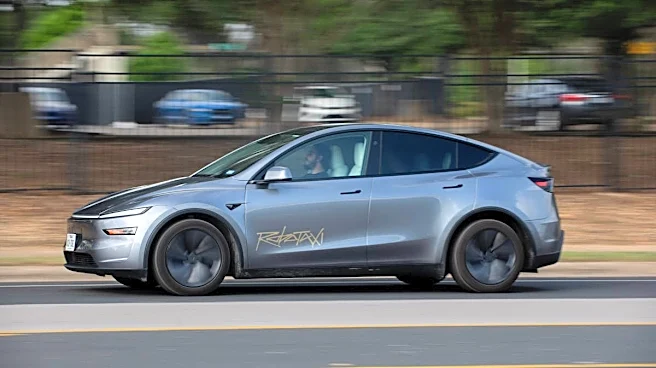
Tesla Inc. has filed an application to build a charging hub with 56 stalls for its autonomous cabs in San Antonio, Texas. This facility is intended for Tesla's private ride-hailing fleet and will not be open to the general public. The move is part of
Tesla's broader strategy to expand its robotaxi service and increase the adoption of its self-driving software. Despite Tesla's ambitions, its robotaxi service currently lags behind industry leader Waymo, which operates a larger fleet across multiple U.S. cities.
Why It's Important?
Tesla's expansion into San Antonio with a dedicated charging hub for robotaxis highlights the growing competition in the autonomous vehicle market. This development could accelerate the adoption of self-driving technology in urban areas, potentially transforming public transportation and reducing reliance on personal vehicles. However, Tesla's current lag behind Waymo indicates challenges in scaling its operations and achieving widespread acceptance. The success of this initiative could influence future urban planning and infrastructure development to accommodate autonomous vehicles.
What's Next?
Tesla's proposal for the San Antonio charging hub is pending approval, and its implementation will depend on regulatory decisions. If successful, Tesla may continue to expand its robotaxi network in other cities, potentially leading to increased competition with companies like Waymo. The development of autonomous vehicle infrastructure could prompt cities to reconsider transportation policies and invest in supporting technologies. Public perception and regulatory frameworks will play critical roles in determining the pace and extent of autonomous vehicle integration.