
What's Happening?
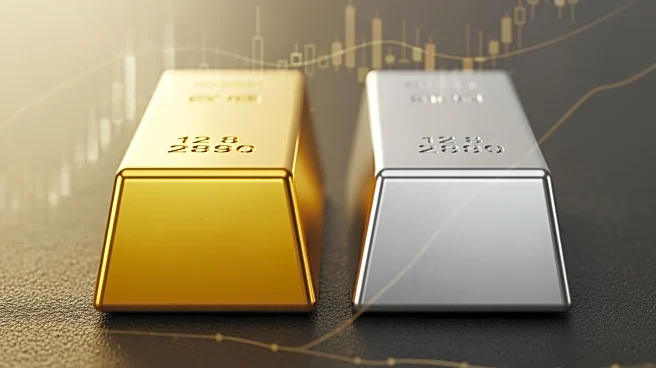
In the first six trading days of 2026, gold and silver have experienced significant price increases, with gold gaining 4.3% and silver 12.4%. This surge is attributed to a combination of factors, including
perceived overvaluation of assets and geopolitical instability. The current trend suggests that gold could reach a forecasted high of 5546 by late February if the pace continues. Despite these gains, the market anticipates potential price retrenchments due to overvaluation concerns. The S&P 500 has also reached record highs, but its price-to-earnings ratio suggests a potential risk of correction. Economic data for 2026 is sparse, with only nine metrics reported so far, including a slight drop in the unemployment rate from 4.5% to 4.4%.
Why It's Important?
The rise in gold and silver prices reflects broader economic uncertainties and investor concerns over asset overvaluation and geopolitical tensions. Precious metals are often seen as safe-haven assets during times of economic instability, and their current performance indicates a shift in investor sentiment. The high price-to-earnings ratio of the S&P 500 suggests that the stock market may be overvalued, posing a risk of a significant correction. This situation could impact investors and financial markets, potentially leading to increased volatility. The limited economic data available for 2026, coupled with the recent government shutdown, adds to the uncertainty, making it challenging for investors to make informed decisions.
What's Next?
As the year progresses, investors will closely monitor economic indicators and geopolitical developments to assess the sustainability of the current trends in precious metals and stock markets. The anticipated retrenchment in gold and silver prices may occur as markets adjust to overvaluation concerns. Additionally, the upcoming earnings season will provide further insights into corporate performance and economic health, potentially influencing market dynamics. Stakeholders, including investors and policymakers, will need to navigate these uncertainties carefully to mitigate risks and capitalize on opportunities.
Beyond the Headlines
The current economic landscape highlights the ongoing challenges of currency instability and geopolitical tensions, which could have long-term implications for global financial markets. The reliance on precious metals as a hedge against economic uncertainty underscores the need for diversified investment strategies. Furthermore, the potential for a significant market correction raises questions about the sustainability of current asset valuations and the broader economic recovery. These developments may prompt policymakers to reassess monetary and fiscal policies to address underlying vulnerabilities in the financial system.