








What's Happening?
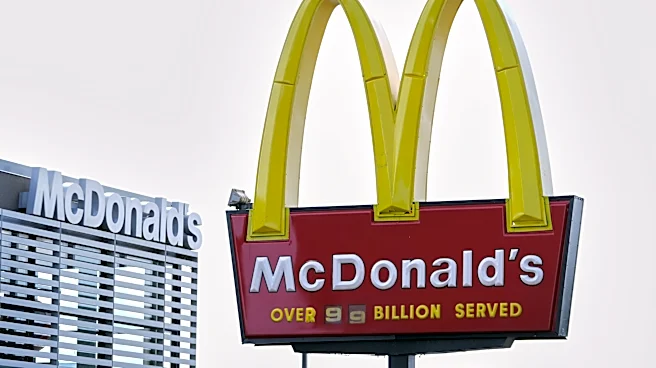
McDonald's has reported a significant increase in its first-quarter earnings, surpassing analysts' expectations. The fast-food giant has strategically focused on affordability, which has resonated well with consumers facing economic pressures, particularly
high gas prices. McDonald's has reduced prices on its combo meals, making them more attractive to cost-conscious customers. This move has resulted in a 9% increase in revenue, reaching $6.52 billion. The company has also simplified its value menu, offering ten items under $3, including the McDouble burger. This approach has been successful in attracting more customers, as evidenced by the increased sales volume. Other fast-food chains like Wendy's and Taco Bell are also adopting similar strategies to appeal to consumers who are spending a significant portion of their disposable income on fuel.
Why It's Important?
The shift towards affordability by McDonald's highlights the broader economic challenges faced by consumers, particularly the impact of rising gas prices. By offering more budget-friendly options, McDonald's is not only increasing its market share but also addressing the needs of a financially strained customer base. This strategy could influence other fast-food chains to adopt similar pricing models, potentially reshaping the competitive landscape of the industry. The focus on affordability is crucial as it aligns with the current economic climate, where consumers are more mindful of their spending. This trend could lead to a more significant emphasis on value in the fast-food sector, affecting pricing strategies and consumer expectations.
What's Next?
As McDonald's continues to capitalize on affordability, it may further refine its menu offerings to maintain its competitive edge. The company might also explore additional cost-cutting measures to sustain profitability while keeping prices low. Other fast-food chains are likely to monitor McDonald's success and adjust their strategies accordingly. The broader economic environment, particularly fluctuations in gas prices, will continue to influence consumer behavior and spending patterns. Policymakers and industry leaders may need to consider the implications of these economic pressures on consumer spending and the fast-food industry's role in providing affordable dining options.