

What's Happening?
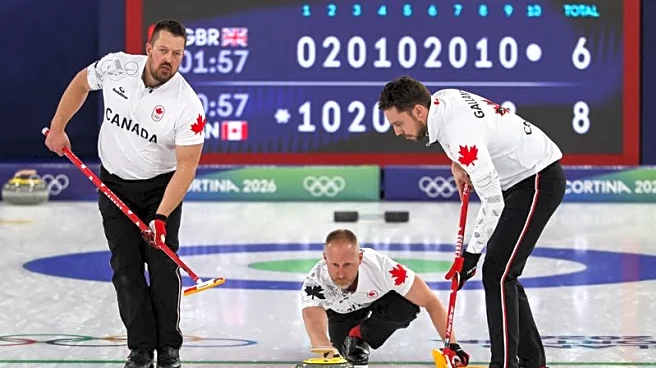
In a closely contested match at the Milano Cortina 2026 Olympic Winter Games, the Canadian women's curling team, led by skip Rachel Homan, defeated the United States 10-7 to win the bronze medal. This victory marks Canada's first medal in the women's curling event
since the 2014 Winter Olympics in Sochi. The match, held at the Cortina Curling Olympic Stadium, saw both teams limiting each other's scoring opportunities, resulting in a tie at 2-2 after four ends. The turning point came in the sixth end when U.S. skip Tabitha Peterson's error allowed Homan to score three points, giving Canada a 5-3 lead. Despite a strong comeback by the U.S., Canada maintained their lead and secured the win. This bronze medal is a significant achievement for Homan, who had previously struggled at the Olympics, finishing outside the qualification spots in past Games.
Why It's Important?
The victory is significant for Canada as it ends a long wait for a medal in women's curling, highlighting the team's resilience and skill. For the U.S., the match was an opportunity to make history by winning their first Olympic medal in women's curling. Although they fell short, the U.S. team's performance was commendable, showcasing their growth and potential in the sport. The match also underscores the competitive nature of Olympic curling, where strategic plays and precision are crucial. The outcome of this match could influence future investments and interest in curling within both countries, potentially boosting the sport's popularity and development.
What's Next?
Following the bronze medal match, attention now turns to the gold medal game between Sweden and Switzerland. For the Canadian team, this victory could serve as a stepping stone for future competitions, as they aim to build on their success and improve their standing in international curling. The U.S. team, despite the loss, can take pride in their performance and use this experience to prepare for upcoming championships. Both teams will likely analyze their performances to refine strategies and enhance their competitiveness in future tournaments.