
What's Happening?
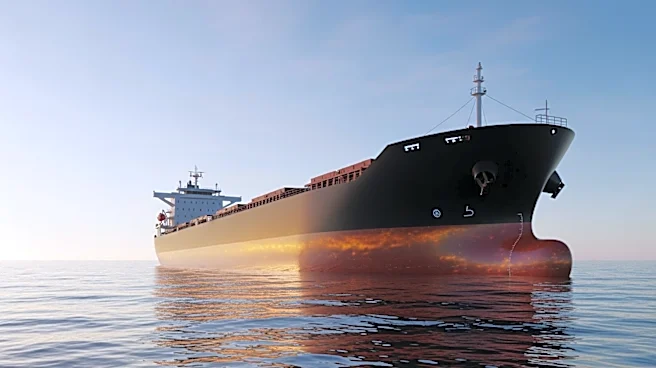
Vale Mining and Chinese Shandong Shipping have finalized the construction of the world's first ocean-going ship powered by ethanol. This innovative vessel, measuring 340 meters in length and with a capacity
of 325,000 tons, is set to begin operations in 2029. The project includes two next-generation Guaibamax ships, with an option for additional units, under a 25-year agreement. The use of ethanol as the primary fuel marks a significant shift from the traditional heavy fuel oil, aiming to reduce carbon emissions by up to 90%. This development aligns with the International Maritime Organization's (IMO) tightened sector targets, which call for a 40% reduction in carbon intensity by 2030 and a move towards net-zero emissions by 2050. The ship is designed to operate on multiple fuels, including methanol and heavy oil, and can be converted to use LNG or ammonia in the future.
Why It's Important?
The introduction of ethanol-powered ships represents a major advancement in the decarbonization of maritime transport, a sector that significantly contributes to global emissions. For Vale, this initiative is a critical component of its strategy to reduce Scope 3 emissions by 15% by 2035. The partnership with Shandong Shipping not only supports Vale's environmental goals but also positions the company as a leader in sustainable maritime practices. The project demonstrates the potential for ethanol to become a viable alternative fuel for large-scale navigation, offering a scalable solution to reduce the carbon footprint of the shipping industry. This move could influence other companies to adopt similar technologies, accelerating the transition to cleaner energy sources in maritime transport.
What's Next?
As the ethanol-powered ships are set to begin operations in 2029, Vale and Shandong Shipping will likely focus on optimizing the technology and ensuring the vessels meet performance expectations. The success of this project could lead to further investments in ethanol and other alternative fuels for maritime transport. Additionally, the industry may see increased regulatory support for low-emission technologies, encouraging more companies to explore sustainable options. The flexibility of the ship's design to accommodate future fuel conversions positions it well for adapting to shifts in the alternative fuel market, ensuring competitiveness in the evolving energy landscape.
Beyond the Headlines
The development of ethanol-powered ships highlights the broader trend of integrating renewable energy sources into traditional industries. This project not only addresses environmental concerns but also reflects a strategic shift towards energy diversification and resilience. The collaboration between Vale and Shandong Shipping underscores the importance of international partnerships in achieving global sustainability goals. As the maritime industry continues to innovate, the adoption of alternative fuels like ethanol could lead to significant economic and environmental benefits, setting a precedent for other sectors to follow.