







What's Happening?
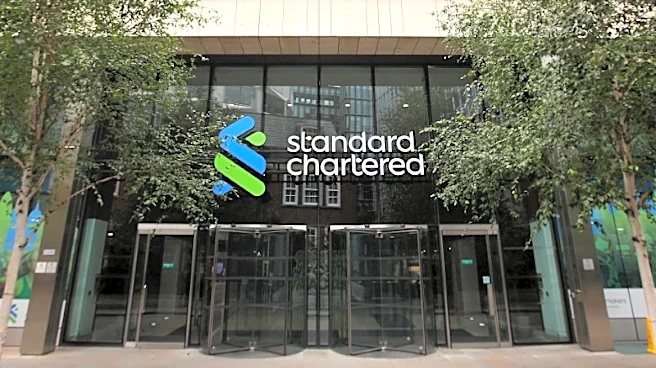
Standard Chartered, a major financial services institution, has announced a significant reduction in its global back-office workforce by 15% by 2030. This move is part of a broader strategy to integrate artificial intelligence (AI) and automation into
its operations. The restructuring will result in the elimination of approximately 7,800 roles, primarily affecting the bank's back-office hubs located in India, China, Malaysia, and Poland. The bank aims to mitigate the impact of these layoffs by redeploying some affected employees to other divisions. This decision aligns with the bank's strategy to enhance profitability and modernize its operations, particularly in its core markets in Asia and Africa. The bank's CEO, Bill Winters, has emphasized the use of automation and AI to streamline processes and improve decision-making.
Why It's Important?
The decision by Standard Chartered to reduce its workforce highlights a growing trend in the financial sector towards automation and AI integration. This shift is expected to enhance operational efficiency and profitability but also poses significant challenges for the labor market. The reduction in human staffing in favor of digital tools reflects a broader industry movement that could reshape employment patterns, particularly affecting entry-level positions and career trajectories. As more financial institutions adopt similar strategies, there could be widespread implications for job security and the future of work in the sector. The move also underscores the increasing importance of AI in driving business strategies and operational efficiencies.
What's Next?
As Standard Chartered implements these changes, the bank will likely focus on redeploying affected employees and optimizing its use of AI and automation. The financial sector may see further adoption of similar strategies by other institutions, potentially leading to more workforce reductions. Stakeholders, including employees and industry analysts, will be closely monitoring the impact of these changes on job markets and operational efficiencies. The bank's approach could serve as a model for other financial institutions looking to balance technological advancements with workforce management.