

What's Happening?
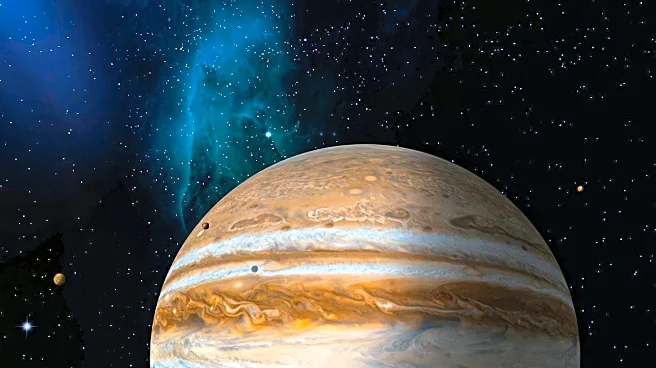
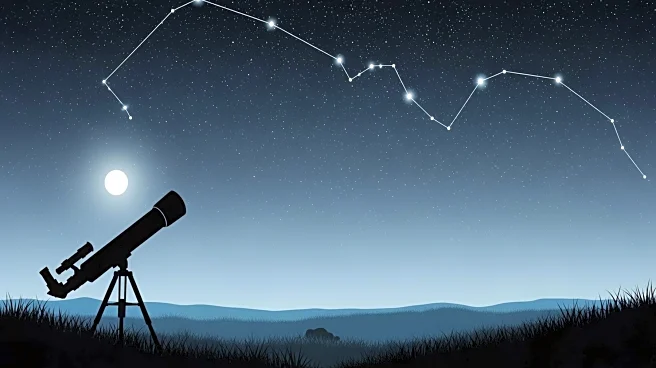
Throughout February, Jupiter has been prominently visible in the constellation Gemini, positioned between the stars Castor and Pollux. As the largest planet in the solar system, Jupiter shines brightly enough to be seen even in areas with significant
light pollution. Unlike stars, Jupiter does not twinkle, making it easily distinguishable in the night sky. Its position relative to the fixed stars changes gradually, reflecting its orbit around the sun and Earth's motion. This celestial event provides a unique opportunity for stargazers to observe the planet's steady glow and track its movement over time.
Why It's Important?
Jupiter's visibility in the night sky offers an accessible way for the public to engage with astronomy and appreciate the dynamics of our solar system. Observing Jupiter can enhance understanding of planetary motion and the relationship between celestial bodies. This event also underscores the importance of preserving dark skies for astronomical observation, as light pollution can hinder the visibility of such phenomena. For amateur astronomers and educators, Jupiter's presence in Gemini serves as a practical example to teach about the solar system's mechanics and the impact of Earth's rotation and orbit.