








What's Happening?
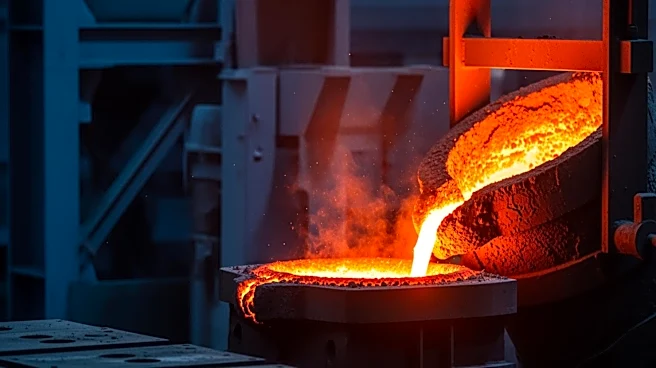
The University of New South Wales (UNSW) is leading a research project to reduce emissions from steel manufacturing by adapting existing blast furnace technology. The project, supported by the Australian Renewable Energy Agency (ARENA), focuses on the Renewable Injections-Sustainable
Burdens (RISB) process. This approach integrates renewable injection materials and alternative burden materials into conventional blast furnace operations. The initiative is part of ARENA's Iron and Steel Research and Development Funding Round, aiming to support the transition to lower-emissions industrial processes.
Why It's Important?
Steel manufacturing is a significant source of greenhouse gas emissions, and reducing these emissions is crucial for achieving global climate goals. The UNSW project could lead to more sustainable steel production, maintaining the use of Australia's lower-grade Pilbara iron ore while reducing carbon emissions. This research supports Australia's broader transition to net zero emissions and could enhance the competitiveness of Australian iron ore in emerging low-emissions markets. Successful implementation of the RISB process could set a precedent for other industries seeking to decarbonize.
What's Next?
The project is currently focused on advancing research and development to assess the technical feasibility of the RISB process. Future steps include validating the low-emission blast furnace ironmaking process and exploring its practical application within existing infrastructure. The initiative aims to identify commercially viable pathways for decarbonizing the iron and steel sector, potentially influencing global steel production practices.