







What's Happening?
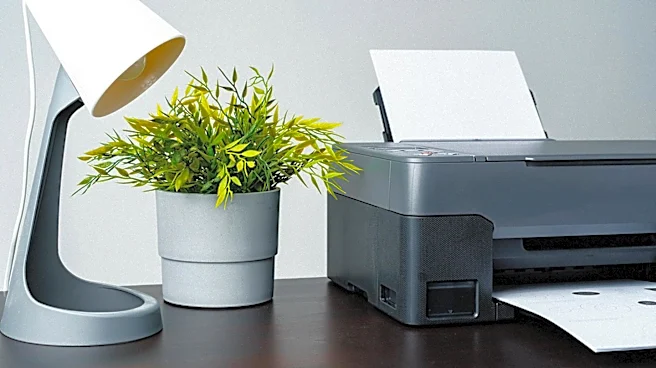
The article discusses the financial and environmental advantages of refillable ink tank printers compared to traditional cartridge printers. It highlights that a typical home user spends approximately $120 annually on ink, with traditional inkjet printers incurring
significant costs over time due to the need for frequent cartridge replacements. Refillable ink tank printers, such as the HP Smart Tank series, offer a more economical alternative by using large, built-in reservoirs that are refilled with ink from bottles. This method significantly reduces the cost per page and minimizes plastic waste. The article notes that while standard cartridge printers cost between 7 to 20 cents per page, ink tank models reduce this to about 1 cent for black-and-white pages and 2 to 3 cents for color pages, resulting in potential savings of $50 to $200 annually for households.
Why It's Important?
The shift towards refillable ink tank printers represents a significant change in consumer printing habits, driven by cost efficiency and environmental concerns. For U.S. households and small businesses, the reduced cost per page can lead to substantial savings over the printer's lifespan, making these models an attractive option for those who print regularly. Additionally, the environmental impact is lessened as refillable models generate less plastic waste compared to cartridge printers. This aligns with broader societal trends towards sustainability and cost-effectiveness. The adoption of refillable ink tank printers could influence the printing industry by encouraging manufacturers to focus on sustainable and economical solutions, potentially leading to innovations in printer technology and a shift in market dynamics.
What's Next?
As consumers become more aware of the benefits of refillable ink tank printers, it is likely that demand for these models will increase. Printer manufacturers may respond by expanding their product lines to include more refillable options, potentially driving down prices further due to increased competition. Additionally, there may be advancements in ink technology and printer design to enhance the user experience and further reduce environmental impact. Consumers and businesses might also see more educational campaigns highlighting the long-term savings and ecological benefits of switching to refillable ink tank printers.
Beyond the Headlines
The transition to refillable ink tank printers could have broader implications for consumer behavior and environmental policy. As more households and businesses adopt these printers, there may be a push for regulatory changes to encourage sustainable practices in the printing industry. This could include incentives for manufacturers to produce eco-friendly products or for consumers to recycle used ink bottles. Furthermore, the success of refillable ink tank printers could inspire similar innovations in other consumer electronics, promoting a culture of sustainability and resource efficiency.