



What's Happening?
Oil prices have surged for the third consecutive day as hopes for a resolution to the Iran conflict diminish. President Trump has indicated that the ceasefire with Iran is 'on life support,' following Tehran's response to a U.S. plan to end the conflict.
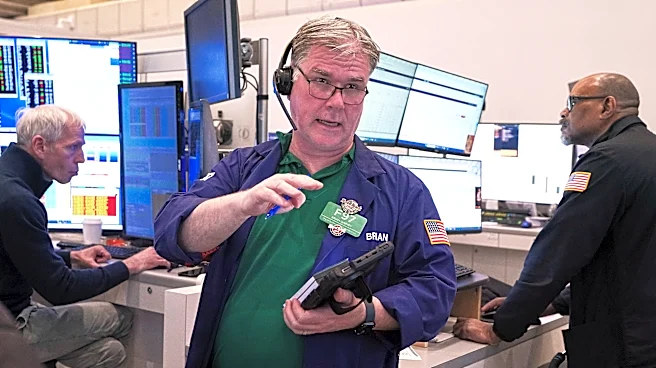
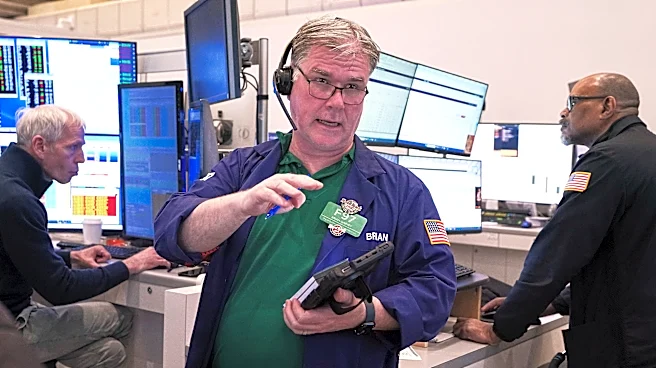
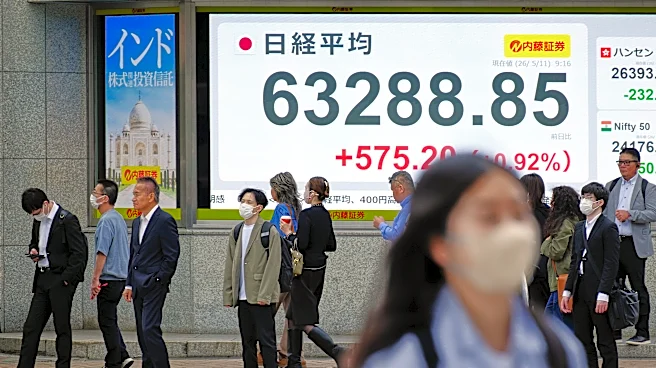
Brent crude futures have risen nearly 4% to approximately $108 per barrel. The uncertainty surrounding the ceasefire has also affected global markets, with European and U.S. stock indices experiencing declines. The STOXX 600 in Europe fell by 0.6%, while U.S. stock futures for the S&P 500 and Nasdaq dropped by 0.4% and 0.9%, respectively. The market is also anticipating U.S. inflation data, which is expected to show a year-on-year increase, potentially influencing Federal Reserve policy decisions.
Why It's Important?
The ongoing conflict between the U.S. and Iran, particularly the uncertainty surrounding the ceasefire, has significant implications for global oil markets and economic stability. Rising oil prices can lead to increased costs for consumers and businesses, potentially slowing economic growth. The situation also highlights the geopolitical risks that can impact global markets, as seen in the fluctuations in stock indices. The anticipated U.S. inflation data could further influence market dynamics, as it may affect Federal Reserve decisions on interest rates. A higher-than-expected inflation rate could lead to increased borrowing costs, impacting economic activity and investor sentiment.
What's Next?
As the situation with Iran remains unresolved, markets will continue to monitor developments closely. President Trump's upcoming visit to China may also influence market expectations, particularly regarding trade and geopolitical relations. Investors will be looking for any signs of progress or resolution that could stabilize oil prices and reduce market volatility. Additionally, the release of U.S. inflation data will be a key factor in shaping market expectations and Federal Reserve policy decisions. The potential for further disruptions in oil supply and economic uncertainty underscores the need for strategic planning and risk management by businesses and policymakers.